
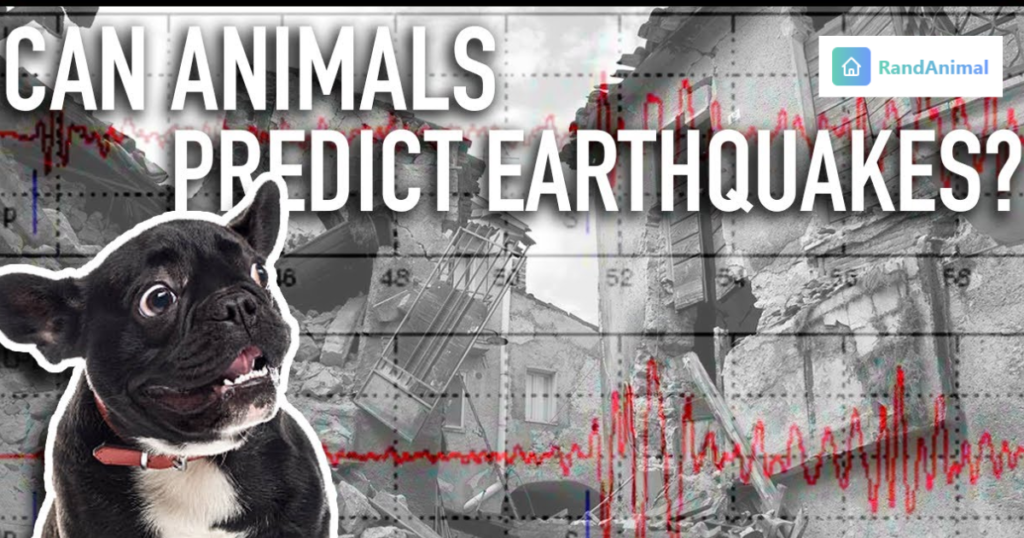
Can animals predict earthquakes? Millions of people ask this every year, and the answer is more complicated and more fascinating than a simple yes or no. For thousands of years, people across the world have noticed the same pattern. In the hours and days before a major earthquake, animals start behaving strangely.
Dogs refuse to settle. Fish leap from calm water. Snakes emerge from the ground in the middle of winter. Elephants move to higher ground without any visible cause. These reports span ancient Greece, imperial China, modern Japan, and rural California, and they have never fully gone away.
Scientists have taken them seriously enough to investigate. Scientists have studied toad behavior before the 2009 L’Aquila earthquake, snake activity before the 1975 Haicheng quake, and animal movement through the ICARUS project. The findings are worth examining. None has yet proven that animals can reliably predict earthquakes.
This article covers what the historical record shows, what science has found so far, and which animals are most commonly linked to unusual pre-earthquake behavior. Learn something new about the animal kingdom with these surprising facts about animals.
A Long History of Strange Animal Behavior
The earliest written accounts date back millennia. In 373 BC, just days before a catastrophic earthquake destroyed the Greek city of Helice, witnesses reported masses of rats, weasels, and snakes fleeing the area. The mass exodus was so conspicuous that it was later remembered as an omen of the disaster.
China has tracked unusual animal behavior before earthquakes for over 2,000 years. At one point, the Chinese government established a national network of observers specifically to monitor animal activity as a potential early warning system. Days later, a powerful earthquake struck.
That said, scientists are careful to note that not every earthquake is preceded by unusual animal behavior, and not every instance of strange animal behavior is followed by an earthquake. The relationship, if it exists, is far from simple.
What Happens Underground Before an Earthquake?
To understand why animals might sense an impending quake, it helps to understand what happens beneath the Earth’s surface before one occurs. In the days and hours leading up to a seismic event, a range of physical changes can take place:
- The ground shifts under increasing pressure
- Gases are released from rock formations
- The water table rises or falls
- Soils develop an electrostatic charge
- Low-frequency sound waves (infrasound) are generated
- Magnetic fields near fault lines fluctuate
Most of these changes are imperceptible to humans. But many animals possess sensory systems far more acute than our own, and some of these senses may be precisely tuned to detect the signals that precede an earthquake. Learn how stripes help zebras survive in the wild with these fascinating 5 science-backed reasons.
How Animals May Sense What We Cannot
Sensitivity to Infrasound
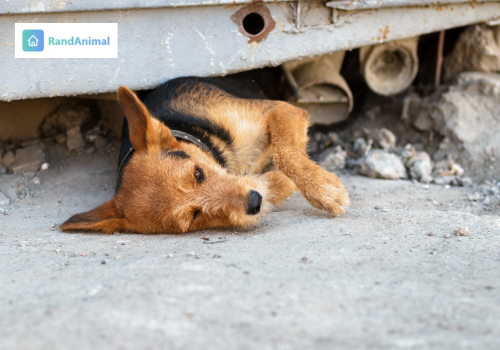
Many animals can hear sounds at frequencies far below the lower limit of human hearing. Elephants, whales, and dogs all use infrasound to communicate across vast distances. Before an earthquake, compressed rock produces low-frequency vibrations that travel through the ground and air. Animals sensitive to these frequencies may detect them long before any tremor is felt by people.
Sensitivity to Ground Vibrations
Snakes and other reptiles maintain constant contact with the ground, making them especially sensitive to even the faintest vibrations. This may explain why snakes are among the most commonly reported animals to behave oddly before earthquakes. Before the 1975 Haicheng earthquake, snakes were seen crawling out of the ground in sub-zero temperatures. Conditions that should have kept them dormant underground.
Sensitivity to Electrical and Magnetic Fields
Certain animals have specialized organs for detecting electrical and magnetic fields. Sharks, rays, and some fish can sense electrical signals in water. Many migratory birds navigate using Earth’s magnetic field. If fault-line activity alters these fields in the lead-up to an earthquake, these animals may register the change before any instruments do.
Sensitivity to Water and Gas Changes
Before an earthquake, groundwater can shift in temperature, chemical composition, and level. Catfish in Japan are perhaps the most famous example of aquatic animals associated with seismic prediction — their restless behavior before earthquakes has been noted for centuries.
Notable Cases from Around the World
Japan, 2011 — In the days before the devastating Tōhoku earthquake and tsunami, many people reported their pets — dogs, cats — becoming unusually agitated. Abnormal fish behavior was also widely documented.
Italy, 2009 — A scientific study of toads near L’Aquila found that the population abandoned their breeding site several days before the earthquake struck, and returned only after the seismic activity had subsided. Researchers considered this one of the more compelling documented cases.
China, 1975 (Haicheng) — Snakes, dogs, and horses all exhibited strange behavior in the days before the quake, contributing to the decision to evacuate — one of the few times a major earthquake evacuation arguably saved lives.
United States, Parkfield — Livestock behavior in this California town, which sits on a seismically active fault, has been the subject of ongoing observation, though findings remain anecdotal.
Examples from Other Parts of the World
Japan, 2011
Many people reported unusual animal activity before the great earthquake and tsunami in Japan, adding to discussions about whether animals predict earthquakes before they happen. Dogs and cats became restless, and fish behavior was also observed.
Italy, 2009
A study of toads in L’Aquila provided one of the strongest cases in animal behavior before earthquake research. The toads moved days before the earthquake, strengthening interest in animals sensing earthquakes.
China, 1975
The Haicheng earthquake is a key example often cited in earthquake prediction animal studies, where snakes, dogs, and horses showed unusual behavior before evacuation.
United States, Parkfield
Reports of livestock behavior in Parkfield contribute to ongoing research into earthquake warning signs from animals, though still considered anecdotal.
What Scientists Say
The scientific community remains cautious. Animal behavior has not yet been validated as a reliable method of earthquake prediction — partly because individual cases are difficult to study systematically, and partly because animals behave strangely for many reasons that have nothing to do with seismic activity.
However, research continues. Projects such as ICARUS are using satellite tracking to monitor animal movement patterns in earthquake-prone regions. Early results suggest that some animals may increase their activity significantly before seismic events, which researchers are now working to quantify.
FAQs:
1. Can animals really predict earthquakes?
Animals may show unusual behavior before earthquakes, but scientists have not confirmed a reliable or consistent ability to predict earthquakes using animal behavior alone.
2. Why do animals behave strangely before earthquakes?
Animals may react to early physical changes like ground vibrations, infrasound, gas release, or changes in water and magnetic fields that humans cannot easily detect.
3. Which animals are most commonly linked to earthquake prediction?
Dogs, snakes, fish (especially catfish), toads, birds, and elephants are most often reported in studies and observations related to earthquake-related behavior.
Conclusion: Can Animals Predict Earthquakes?
Animals almost certainly detect physical changes that precede earthquakes: infrasound, ground vibrations, shifts in magnetic fields, changes in groundwater. The sensory biology is well-established.
What we can say with confidence is that the question deserves to be taken seriously. The historical record spans continents and millennia. Peer-reviewed studies, from the toads of L’Aquila to the GPS-tracked animals of the ICARUS project, have found patterns worth investigating further. And the stakes are high enough that no credible lead should be dismissed because it sounds too strange.
For now, animals remain unreliable predictors in any formal sense: too inconsistent, too difficult to monitor at scale, and too easily influenced by factors unrelated to seismic activity. But as tracking technology improves and datasets grow, that picture may change. The animals have been trying to tell us something for a very long time. Whether we can learn to listen is a question still very much open. Animals perceive the world through senses far beyond our own. From predicting earthquakes to which animal never sleeps its entire life, the natural world continues to surprise us in ways science is still working to explain.

Ali is an animal enthusiast and wildlife writer with a passion for making nature science easy to understand. He has been researching and writing about animal behavior and biology for over 3 years.