
Most living things die within days without water. These ten animals do not. Across the scorching deserts of Africa, the arid interior of Australia, and the dry grasslands of North America, a small number of species have evolved biology so efficient at conserving and producing water that drinking becomes optional, sometimes for months, sometimes for years. This is not simply tolerance for thirst.
These animals have restructured their kidneys, blood cells, skin, and metabolism at a fundamental level to make water scarcity irrelevant. Here is how they do it. Here are 10 incredible animals that can survive without water for long periods and the science behind their remarkable adaptations. Ever wondered if fish really sleep? Find the answer in this detailed explanation of fish rest patterns.
1. Camel
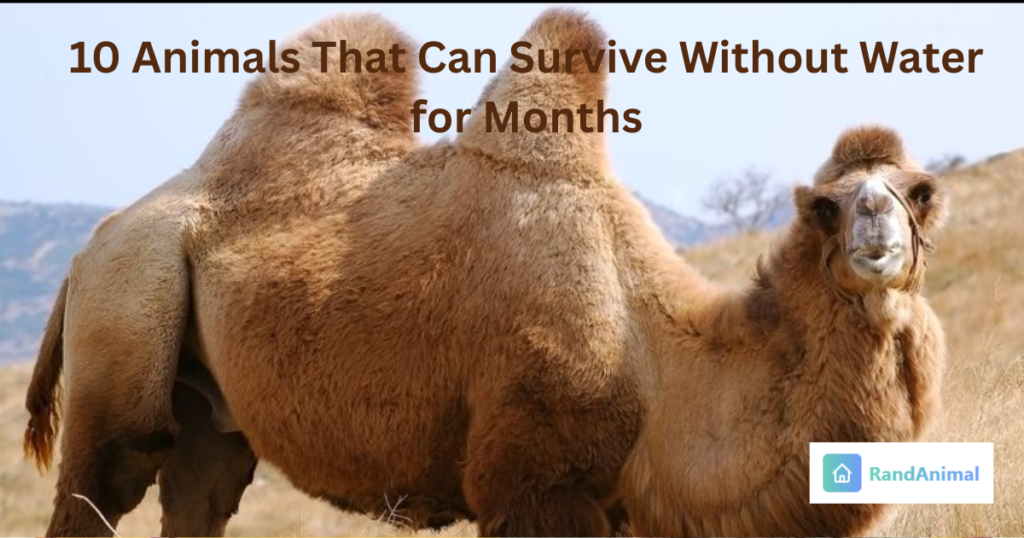
When it comes to living without water, the camel is the most popular animal. In cool temperatures, a camel can survive for as long as six months without drinking water; in the hottest desert areas, for as long as two weeks. If a camel does find water, it can drink as much as 200 litres at a time.
The humps store fat, not water. When that fat is metabolized, it produces hydrogen atoms that bond with inhaled oxygen to generate water molecules internally. This process, called metabolic water production, is a secondary benefit rather than the primary survival mechanism. The camel’s real advantage is how aggressively it conserves every drop it takes in.
The urine of a camel is very concentrated, and camels produce very dry feces to reduce water loss. When the blood becomes thick due to dehydration, its oval-shaped blood cells continue to flow freely and do not clump together, unlike the blood cells of many other animals. Camels also increase their body temperature during the day to reduce sweating and lower it at night to release heat.
2. Kangaroo Rat
The kangaroo rat lives in the deserts of North America and rarely drinks water. The seeds it eats provide nearly all of its water requirements. When dry seeds are metabolized for energy, a small but continuous amount of water is produced. The kangaroo rat can survive using this internally generated water.
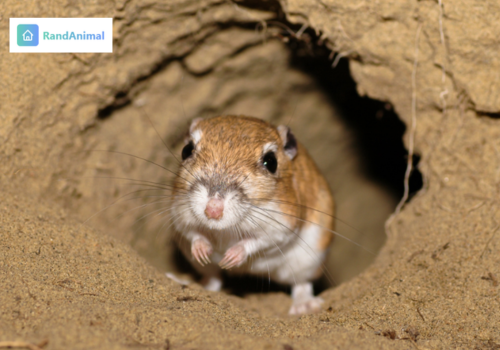
During the hottest parts of the day, the kangaroo rat remains inside its cool underground burrow and emerges at night when temperatures are lower. It has extremely efficient kidneys that produce highly concentrated urine. Its nasal passages are also specially adapted to recover moisture from the air it exhales.
3. Thorny Devil
The thorny devil is a small lizard found in Australia’s arid desert regions. It has one of the most ingenious water-collection systems in the animal kingdom. Its body is covered with tiny grooves between its scales. These grooves act like miniature channels. When the lizard comes into contact with wet sand, dew, rain, or moisture from fog, water travels through these channels by capillary action directly to the corners of its mouth.
The lizard then swallows the water without needing to bend down and drink. This remarkable system allows the thorny devil to collect water from wet soil, rain, dew, and even fog, making it one of the most efficient desert animals at gathering moisture. Learn how stripes help zebras survive in the wild with these fascinating 5 science-backed reasons.
4. Giraffe
Giraffes live in the dry African savannas and can survive for more than a week without drinking water. Most of the moisture they need comes from the leaves they eat.
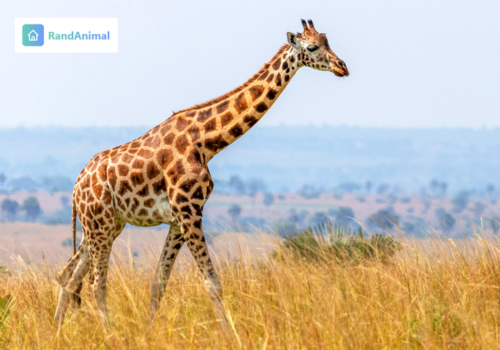
Acacia leaves make up a large portion of a giraffe’s diet and contain a useful amount of water. By consuming large quantities of these leaves each day, giraffes obtain much of the moisture required for survival.
Drinking water can be risky for giraffes. To reach the ground, they must spread their legs and bend their long necks, leaving them vulnerable to predators such as lions and crocodiles. As a result, giraffes have evolved to rely heavily on the moisture found in their food.
5. Desert Tortoise
The desert tortoise lives in the Mojave and Sonoran deserts of North America and can survive for up to a year without drinking water. It stores water in its bladder and uses these reserves during long dry periods. A desert tortoise can accumulate enough water during wetter times to sustain itself through an entire dry season.
This stored water is extremely important. If a desert tortoise becomes frightened or is handled, it may release the water stored in its bladder as a defense response. In harsh desert conditions, losing this water can significantly reduce its chances of survival.
During the hottest and driest months, desert tortoises retreat into underground burrows and enter a dormant state called estivation. During this period, their metabolism slows dramatically, reducing water and energy consumption until environmental conditions improve.
6. Water-Holding Frog
The water-holding frog, found in the dry interior regions of Australia, has one of the most remarkable survival strategies among amphibians. After rainfall, the frog emerges, feeds heavily, and absorbs large amounts of water through its skin. It then burrows deep into the ground and sheds layers of skin, forming a thick waterproof cocoon around its body.
Inside this cocoon, the frog can survive for up to five years while waiting for the next rainfall. Its body functions slow to an extremely low level, and it relies on water stored in its bladder and body tissues. The water stored in the frog’s bladder is clean enough that Indigenous Australians historically used it as an emergency water source during droughts, a fact that has since informed research into biological water storage and filtration.
When rain finally returns, the frog senses the moisture, breaks out of its cocoon, and resumes its normal life cycle until the next dry period arrives.
7. Fennec Fox
The smallest fox in the world is the fennec fox, which also lives in the North African Sahara. It can survive for long periods without drinking water directly. Like the kangaroo rat, the fennec fox gets most of the water it needs from its food. It consumes insects, small lizards, rodents, and vegetation, all of which contain adequate moisture for its sustenance.
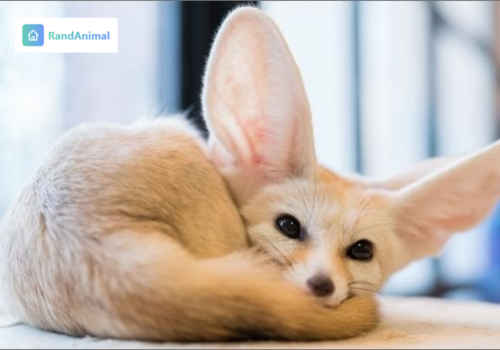
The fennec fox also possesses several physical traits that aid it in combating overheating and water loss. It has very large ears, and these help it cool off. It has thick fur to keep it warm on the hot desert ground during the day and during the cold desert nights. It also produces highly concentrated urine, which helps conserve water.
8. Sandgrouse
Sandgrouse are birds that occur in the dry areas of Africa and Asia. To bring water to their chicks, adult sandgrouse may fly as far as 80 km in a single day. The extraordinary aspect about this bird, however, is that the male bird returns with water for the young.
Male sandgrouse have specialized belly feathers that can absorb and store water. The male wades into water, soaks its belly feathers, and returns to the nest. The chicks then drink directly from the feathers. This remarkable adaptation allows sandgrouse to raise their young far from permanent water sources.
Seeds and other dry food also provide a small amount of water to adult sandgrouse, reducing the need for frequent trips to water.
9. Elf Owl
The smallest owl, the elf owl, lives in the desert regions of the southwestern United States and Mexico. It can extract almost all the water it requires from its prey and is therefore able to survive in very arid environments. Its prey, including insects, scorpions, and small lizards, contains enough moisture to meet most of the owl’s water needs.
The elf owl also spends the hottest part of the day inside cactus holes or tree cavities. It is mainly active during the evening and night, which helps minimize water loss. These adaptations allow the elf owl to survive in areas where water is extremely scarce.
10. Crocodile
Among the hardiest animals on Earth are crocodiles. Their wetland habitats can shrink dramatically or even disappear during dry seasons, yet crocodiles can survive without food or water for several months. During these periods, they slow their metabolism considerably and enter a state of dormancy.
Their bodies rely on stored fat reserves for energy while their water requirements remain extremely low. Crocodiles also possess a highly efficient kidney system that concentrates waste and minimizes water loss. Their thick, scaly skin helps retain moisture. During dormancy, a crocodile’s heart rate can drop to just two or three beats per minute. Its digestive system shuts down almost entirely.
This metabolic suppression is so extreme that researchers studying it have contributed to broader science around organ preservation and suspended animation in medical research. Crocodiles live in rivers and swamps but have been known to travel many miles in search of water and have survived in areas where no water was available for months.
Why These Survival Strategies Evolved Independently Across Species
There are several techniques that these animals use to survive without water for long periods, and many of these strategies are shared.
Most reduce water loss by limiting activity during the hottest part of the day. Many produce highly concentrated waste to conserve water. Some obtain moisture directly from their food, while others store water within their bodies and use it gradually over time.
These methods have evolved over millions of years to cope with environments where water is scarce and unpredictable. Animals that were best adapted to conserving water survived and passed those traits on to their offspring.
Why These Animals Are Important
Animals that can survive without water are important components of their ecosystems. Desert animals serve as prey for other species, help disperse seeds, and control insect populations. Removing a species from a dry ecosystem can trigger significant changes throughout the food web.
The knowledge gained from studying how these animals manage water is also scientifically valuable. Researchers study desert animals’ kidneys and the ability of reptiles and amphibians to survive dehydration to better understand water conservation and kidney function in humans.
These animals also serve as important indicators of ecosystem health. Their ability to survive in extreme conditions helps scientists understand how wildlife may respond to climate change and increasing droughts around the world.
FAQs
1. Which animal can survive the longest without drinking water?
The desert tortoise is one of the animals that can survive the longest without drinking water. It can live for up to a year using water stored in its bladder and by reducing its activity during dry periods.
2. How do desert animals get water if they do not drink?
Many desert animals obtain water from the food they eat. Others collect moisture from dew, rain, or wet soil, while some store water inside their bodies and use it gradually when water sources are unavailable.
3. Why is studying water-saving animals important?
Scientists study these animals to understand how they conserve water and survive dehydration. This research can help improve knowledge about kidney function, water conservation, and treatments for dehydration in humans.
4. Which animal on this list survives the longest without water?
The water-holding frog is one of the most remarkable examples. By storing water and entering a dormant state inside a protective cocoon, it can survive for several years until rainfall returns.
Final Thoughts
Water scarcity kills most animals within days. The ten species on this list have spent millions of years evolving past that limit, developing biological systems so precise that researchers still study them to understand kidney function, metabolic water production, and cellular dehydration tolerance in humans. The camel, the kangaroo rat, the water-holding frog- none of these animals simply endures drought.
They have restructured their entire physiology around it. That is not adaptation in the casual sense. That is evolution producing engineering that human medicine is still trying to reverse-engineer. As climate change pushes more ecosystems toward drought conditions, understanding how these animals survive is no longer just zoology. It is a blueprint.

Ali is an animal enthusiast and wildlife writer with a passion for making nature science easy to understand. He has been researching and writing about animal behavior and biology for over 3 years.