
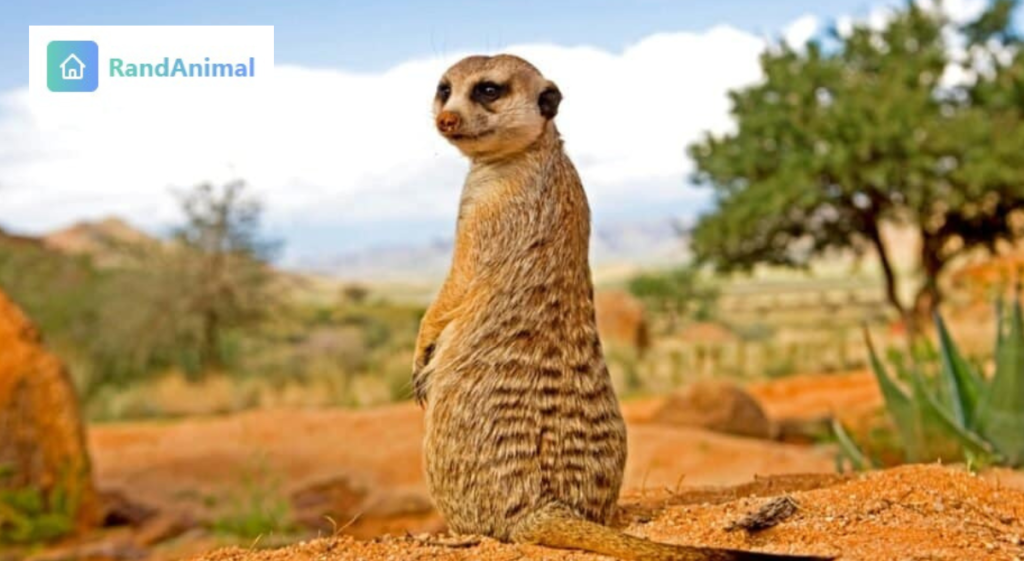
Sleep feels so fundamental to life that imagining an animal that never sleeps seems impossible. Humans die from prolonged sleep deprivation. Most mammals, birds, reptiles, and fish sleep in some form. Yet a handful of creatures appear to operate continuously, without the rest cycles that govern nearly every other animal on Earth. Sleep is something every living creature needs, or so we thought. Which animal never sleeps its entire life is one of the most fascinating and mind-bending questions in all of biology.
While humans can barely survive a week without sleep, some extraordinary creatures have evolved to stay perpetually alert, active, and alive without ever truly shutting down.
In this article, we’ll explore the remarkable animals that never sleep, uncover the extraordinary science behind their sleepless existence, and reveal what these incredible creatures can teach us about the true purpose and biology of sleep itself. Read More about Animals With The Strongest Bite Force List
So What Is Sleep, Scientifically?
To begin with, it’s crucial to understand what sleep is. The definition is key because the list of animals that don’t sleep depends entirely on how sleep is defined.
Scientific Criteria of Sleep (Mammals & Birds)
There are three measurable criteria of sleep in mammals and birds:
1. Behavioural quiescence
The animal becomes motionless and responds less to its surroundings.
2. Reversibility
The animal can be easily roused from sleep, as quickly as it entered it.
3. Change in brain state
An electroencephalogram (EEG) shows unique slow-wave or REM activity different from wakefulness.
What About Animals Without Complex Brains?
In animals without complex brains, such as invertebrates, EEG-based measurement is not possible. Instead, scientists look for behavioural sleep, characterized by:
- Prolonged inactivity
- Decreased responsiveness
- Rebound effect (sleep deprivation leads to longer sleep)
This rebound effect is important because it shows sleep is regulated, not random.
An animal may appear active but still be in a sleep-like neurological state. Likewise, stillness does not always mean sleep in the mammalian sense.
The Main Contenders
1. Bullfrogs (Lithobates catesbeianus)
Lifespan: 7–10 years (wild)
Habitat: Ponds, lakes, marshes, and slow-moving streams in North America
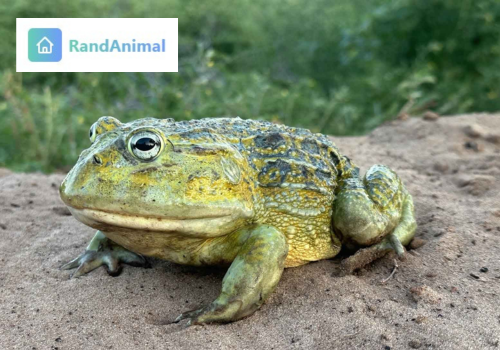
Bullfrogs are often cited as animals that are believed to have very unclear or minimal sleep behavior. Early studies in the 1960s–1970s used mild electrical stimulation during rest and activity phases. Researchers found that bullfrogs responded to stimuli similarly whether resting or active, unlike mammals that respond more slowly during sleep.
This led to the idea that bullfrogs might not experience sleep like mammals, since they did not appear fully unresponsive during inactivity.
Updated Scientific View
Modern research has challenged this interpretation. Studies, including a 2021 paper in iScience, show that even very simple animals exhibit sleep-like states. Read More Animals That Can Regrow Body Parts
Across species, core sleep features include:
- Reduced responsiveness
- Prolonged inactivity
- Rebound after deprivation
For bullfrogs, it remains unclear whether they lack sleep or simply experience a very light or different form of it.
Current verdict:
There is no definitive proof. Bullfrogs remain a scientific mystery rather than a confirmed non-sleeping species.
2. Alpine Swift (Tachymarptis melba)
Habitat: Mountain regions of southern Europe and Africa; migrates through sub-Saharan Africa
Lifespan: Up to 26 years
The alpine swift is one of the most extraordinary cases in vertebrate biology. A 2013 Nature Communications study revealed that these birds can remain airborne for weeks to months without landing.
They feed in flight, drink on the wing, and are believed to sleep while flying.
How Do They Sleep in the Air?
The leading explanation is unihemispheric slow-wave sleep (USWS), where:
- One-half of the brain sleeps
- The other half stays awake
In this state:
- The sleeping hemisphere rests
- The awake hemisphere controls flight, navigation, and awareness
This allows continuous movement while still achieving neurological rest.
3. Cetaceans (Dolphins and Whales)
Order: Cetacea
Habitat: Oceans worldwide
Example: Tursiops truncatus (bottlenose dolphin)
Lifespan: 20–60 years, depending on species
Dolphins and whales face a unique challenge: they must consciously breathe. If they entered full unconscious sleep like land mammals, they could drown. Explore the science behind animal migration and discover why millions of creatures travel vast distances each year in one of nature’s most remarkable phenomena.
Solution: Unihemispheric Slow-Wave Sleep (USWS)
To survive, they evolved extreme USWS:
- One hemisphere of the brain sleeps
- The other remains awake
Behaviorally:
- One eye stays open (connected to the active hemisphere)
- The other eye remains closed
After a period, roles switch between hemispheres.
This phenomenon was confirmed in studies by Russian scientist Lev Mukhametov in the 1960s–70s using EEG recordings in bottlenose dolphins.
Dolphins experience true slow-wave sleep, but divided between hemispheres.
Evolution’s Answer to Sleep
Evolution has produced unihemispheric slow-wave sleep (USWS):
- One eye remains open in dolphins
- The active hemisphere controls movement and awareness
- The sleeping hemisphere rests
After some time, the roles switch.
Sperm whales show a different pattern.
In 2008, scientists observed sperm whales in vertical, motionless formations near the ocean surface. These states lasted up to 12 minutes and appeared to be a form of deep whole-brain sleep.
This rare behavior has been directly observed and remains one of the most unusual sleep states recorded in marine mammals.
Despite appearances, dolphins do sleep—but not like humans. One-half of their brain remains active at all times throughout their lives.
4. Migratory Birds
Sleeping During a Flight Across Thousands of Kilometres
The alpine swift is not unique. Several migratory bird species are capable of sleeping while flying.
Frigatebirds (Fregata magnificens)
A 2016 Nature Communications study revealed:
- Birds sleep in flight using unihemispheric slow-wave sleep
- Occasionally, they enter brief bihemispheric sleep lasting only seconds
- Average sleep during flight: ~41 minutes per day
- On land: more than 12 hours per day
Bar-tailed Godwits (Limosa lapponica baueri)
These birds perform one of the longest non-stop migrations in the animal kingdom:
- Over 11,000 km
- From Alaska to New Zealand
- Without resting for about 9 days
While their exact sleep patterns during flight are not fully understood, evidence from other migratory birds strongly suggests that minimal in-flight sleep is essential for survival.
Key Insight
Migratory birds demonstrate that the boundary between sleep and wakefulness is flexible. Under extreme migration pressure:
- Sleep becomes shorter
- More fragmented
- Shifted into flight
- But never eliminated
5. Jellyfish
Sleep Without a Brain
Scientific Name: Various (Cassiopea spp.)
Habitat: Oceans worldwide
In 2017, scientists at Caltech discovered sleep-like behavior in jellyfish despite having no brain or central nervous system.
Cassiopea Jellyfish Study
Researchers observed that:
- Bell movement decreases significantly at night
- ~39 contractions per minute at night
- ~58 during the day
- Jellyfish are harder to stimulate during rest periods
- When sleep is disrupted, they show a rebound effect the next day
Scientific Importance
This suggests:
- Sleep is not exclusive to the brain
- It may be a cellular or metabolic process
- It could be evolutionarily ancient (500–700 million years old)
- Possibly present in very primitive life forms
6. Sea Otters (Enhydra lutris)
Status: Endangered (IUCN)
Sea otters exhibit highly social sleep behavior:
- They sleep floating on the ocean surface
- Form groups called rafts
- Hold paws to stay together
- Use kelp as natural anchors
- Mothers carry pups while sleeping
- Occasionally, keep one paw above water for stability
Their extremely dense fur traps air, helping them float and stay warm.
Sea otters do sleep, but in a highly adaptive marine system.
7. Sharks — Especially Great White (Carcharodon carcharias)
Status: Vulnerable
Shark sleep is still poorly understood.
Key Points:
- Great whites must keep swimming to pass water over their gills (ram ventilation)
- Stopping movement may cause suffocation
- No EEG studies exist on wild great white sharks

Theories:
- Possible rest-like swimming state
- Spinal motor automation may allow movement without full conscious control
- Some species can rest motionlessly (e.g., nurse sharks)
Conclusion:
Shark sleep remains speculative and not fully confirmed in great whites.
8. Immortal Jellyfish (Turritopsis dohrnii)
Size: ~4.5 mm
Habitat: Oceans worldwide
This jellyfish can revert from adult to juvenile form through transdifferentiation, effectively resetting its life cycle.
Key Idea:
- Potential biological immortality under ideal conditions
- Cells transform back into earlier developmental stages
Sleep behavior is not well studied, but it likely experiences metabolic rest cycles.
So Which Animal Truly Never Sleeps?
Based on current science, no animal has been definitively proven to never sleep.
Instead, there is a spectrum:
- Dolphins: split-brain sleep
- Migratory birds: in-flight microsleep
- Jellyfish: brainless sleep-like behavior
- Sharks: still unknown
- Bullfrogs: disputed and unclear
- Many species: extreme sleep reduction, not elimination
Even the strongest candidates are not confirmed non-sleepers.
Why Do Animals Sleep at All?
Sleep performs essential biological functions:
- Memory consolidation
- Brain waste clearance (glymphatic system)
- Immune system support
- Cellular repair
- Energy conservation
These functions explain why evolution adapts sleep rather than eliminating it.
The Animals That Sleep the Least
| Animal | Daily Sleep | Notes |
|---|---|---|
| Giraffe | 30 min–2 hrs | Short bursts |
| Elephant | ~2 hrs | Rare lying REM sleep |
| Horse | 2–3 hrs | Can sleep standing |
| Dolphin | Variable | Unihemispheric sleep |
| Alpine Swift | Near zero | In-flight sleep only |
| Frigatebird | ~41 min | EEG confirmed |
| Bullfrog | Unknown | Disputed |
| Human | 7–9 hrs | Moderate |
| Brown Bat | 19–20 hrs | Among highest |
Final Thought
The search for an animal that never sleeps is really a search for the limits of life. Every time science suggests an animal does not sleep, further research often reveals hidden or unusual sleep-like states.
Sleep is not a single fixed behavior—it is a spectrum shaped by evolution. The alpine swift flying through the night sky, with one hemisphere of its brain resting while the other navigates the stars, may be the closest thing to a “sleepless” animal. Read More: Animals That Can Regrow Body Parts

Ali is an animal enthusiast and wildlife writer with a passion for making nature science easy to understand. He has been researching and writing about animal behavior and biology for over 3 years.