
Humans have walked on the moon and mapped the surface of Mars, yet 80% of our own ocean floor remains unseen. What little science has retrieved from the deep is already difficult to explain. The top 10 scariest deep-sea animals ever discovered include creatures with fully transparent skulls, teeth so large they cannot close their own mouths, and jaws that detach and expand to swallow prey larger than their entire body.
These are not edge cases or rare mutations. They are thriving species, perfectly engineered by millions of years of evolution in total darkness, and they are down there right now. These animals evolved in complete darkness, under pressures that would crush a submarine. This is not fiction; this is what actually lives beneath us, right now. Read More about 10 Deep-Sea Animals That Look Like Aliens.
Anglerfish
We’ve stated many times before, but the anglerfish is deserving of this ranking with no question. It inhabits the dark region of the ocean, 200 to 4,000 metres below the surface. It is dark in color; it has loose skin and a large mouth.
Its teeth are elongated, curved, and clear, making it more difficult for prey to detect until it is too late. A long spine with a luminous tip is on top of its head. The light is used by the anglerfish to attract prey. In the dark, the small fish swims towards the light.
The anglerfish waits just still and eats its prey when it comes close. Its stomach is so large that it can swallow prey bigger than its body. The life and lifestyle of anglerfish are even stranger. The male lives a life searching for a female. If it locates one, it bites into her body and clings. With time, the male will merge with the female.
His eyes disappear. His organs dissolve. Over time, the male’s eyes dissolve, his organs merge with hers, and he becomes permanently fused to her body, existing solely to provide reproductive function. It is one of the most extreme examples of biological dependency in the animal kingdom.

Giant Squid (Architeuthis dux)
One of the biggest and most elusive animals in the world is the giant squid. It lives at depths of 300 to 1000 meters, and can reach a length of 13 m. It was only known from the remains found within the stomachs of sperm whales for most of the history of mankind.
Until 2004, it had never been filmed in the wild, alive, and in its natural habitat.
It was captured as a large, swishy marine cephalopod with two long feeding tentacles, eight arms containing sharp-toothed suckers, and eyes that are as big as dinner plates. The eyes of these creatures are around 30cm across, among the largest recorded in the animal kingdom.
In a deep-sea interaction, giant squid and sperm whales may engage in physical encounters. Large circular scars produced by suckers of the giant squid have been discovered on the skins of dead sperm whales. These interactions occur much deeper than any human diving capability.
Goblin Shark
The goblin shark is most likely pale pink and slow-moving, and appears to be made out of spare parts. Its long, flat snout sticks out well past its face. It has a backwards-set jaw, which appears out of place. It detects food, and when it sees it, this mouthful of jaws shoots out at it from the mouth at sufficient velocity and force to capture food that the shark could never catch on its own.
As the jaw extends, this will occur faster than most cameras can capture. It is known as “slingshot feeding”. The whole lower jaw is thrust outwards at once, and is then retracted at once. Learn more in Deep Sea Creatures That Glow in the Dark, where you can explore how bioluminescent animals survive and thrive in the deepest, darkest parts of the ocean.
So far, the goblin shark has been sighted in oceans all over the world, at depths reaching as deep as 1,300 meters. The vast majority of sightings are incidental and occur when the fish is brought up by accident in fishing nets from the depths. One of the most primitive living groups of sharks dates back approximately 125 million years.
Frilled Shark
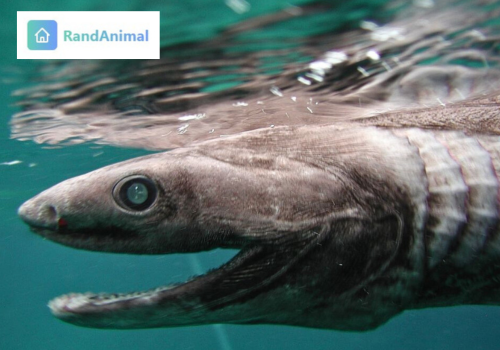
The frilled shark doesn’t look like a shark; it looks like a snake. It swims from side to side and looks much more like an eel or sea serpent than a fish. It has approximately 300 teeth in each row and in total. The end of each tooth has three sharp points. The frilled shark retracts its body after catching a squid, then violently extends its body like a coiled spring.
The prey doesn’t have much time to respond. It ranges from 120 to 1,500 meters below the sea’s surface. It is seldom observed near the surface, and this is one of the reasons why so few people have ever observed one.
The ones that have been observed in the upper sections of the water were likely sick or disoriented. The frilled shark has hardly evolved over millions of years. Today’s sightings bear a striking resemblance to those that swam in prehistoric oceans.
Fangtooth Fish
The fangtooth fish is small in size. It will only reach a length of 16cm. But its teeth are the largest out of all the fish in the ocean in comparison to its body. They are long enough that the fish can’t completely close its mouth. When the fish’s jaws close, the lower ones move into two pockets next to the brain, or the fish would poke itself in the head.
It has a complete brown body and is almost transparent at depth. The only striking feature of this animal is the pale teeth. It lives from 200 to 5,000 metres, and moves to deeper or shallower layers of the ocean depending on light and food availability.
When viewed close-up, this fangtooth fish resembles an organism one wouldn’t expect to find in a creature-friendly world. At depth, its dark body becomes nearly invisible, leaving only the pale teeth visible in any ambient light, which may itself serve as a warning to other predators.
Viperfish (Chauliodus sloani)
The viperfish has long, sharp teeth that stick out from its mouth even when it is shut. The fangs curve in towards the body, so the prey that gets stuck in that mouth can’t get out. It is covered with light-producing organs that glow in the dark.
Its mode of hunting is by using the fast swimming ability of its mouth. The viperfish snaps its head back when it comes in contact with the front teeth to extend them deep into the fish or crustacean. The strike is considered one of the fastest predatory movements in the ocean.
The viperfish is found between 250 and 4,500 m. It is a deep-dwelling fish during the day. It comes up nearer to the surface at night to feed. Some viperfish are able to survive for several days without eating anything and subsist on their stored energy.
Gulper Eel (Eurypharynx pelecanoides)
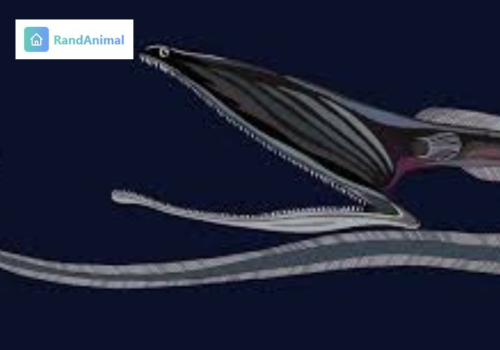
The gulper eel looks like a giant mouth attached to a thin tail. Its jaw takes up most of its body length and opens wide enough to swallow animals much larger than itself. The loose skin around the jaw stretches to hold whatever the eel manages to catch.
At the tip of its tail sits a small glowing organ that the eel uses to attract prey. When a curious animal approaches the light, the gulper eel swings its enormous mouth open and sweeps in whatever is nearby.
It lives at depths of 500 to 3,000 meters. It relies on opportunity more than speed. When food is scarce and meals are unpredictable, having a mouth that can handle almost anything is a useful adaptation.
Colossal Squid (Mesonychoteuthis hamiltoni)
The colossal squid is even larger than the giant squid and among the most powerful known deep-sea cephalopods. It lives in the deep waters around Antarctica at depths of up to 2,200 meters. While the giant squid has suckers lined with small teeth, the colossal squid has sharp, rotating hooks on both its suckers and its arms.
The largest confirmed colossal squid ever measured was over 4.5 meters long and weighed close to 500 kilograms. Scientists believe they may grow even larger than confirmed records. Its eyes are thought to be among the largest in the animal kingdom, possibly reaching 40 centimeters across.
Almost everything known about the colossal squid comes from dead or dying specimens and from remains found inside the stomachs of sperm whales and sleeper sharks. It has never been filmed in open water in its natural habitat.
Pacific Sleeper Shark (Somniosus pacificus)
The Pacific sleeper shark is large, slow, and almost completely silent. It can grow up to 7 meters long and lives at depths of up to 2,000 meters in the North Pacific Ocean. Its slow movement makes it easy to overlook, but what this shark lacks in speed, it makes up for in patience.
Sleeper sharks are scavengers and active predators. They have been found with the remains of seals, dolphins, and even moose in their stomachs, depending on availability. They move through the water so quietly that prey often does not notice them until the shark is already close.
The Pacific sleeper shark is also one of the longest-living vertebrates on Earth. Some scientific studies on related species suggest lifespans that may extend for centuries, making them among the longest-lived sharks known.
Giant Isopod (Bathynomus giganteus)
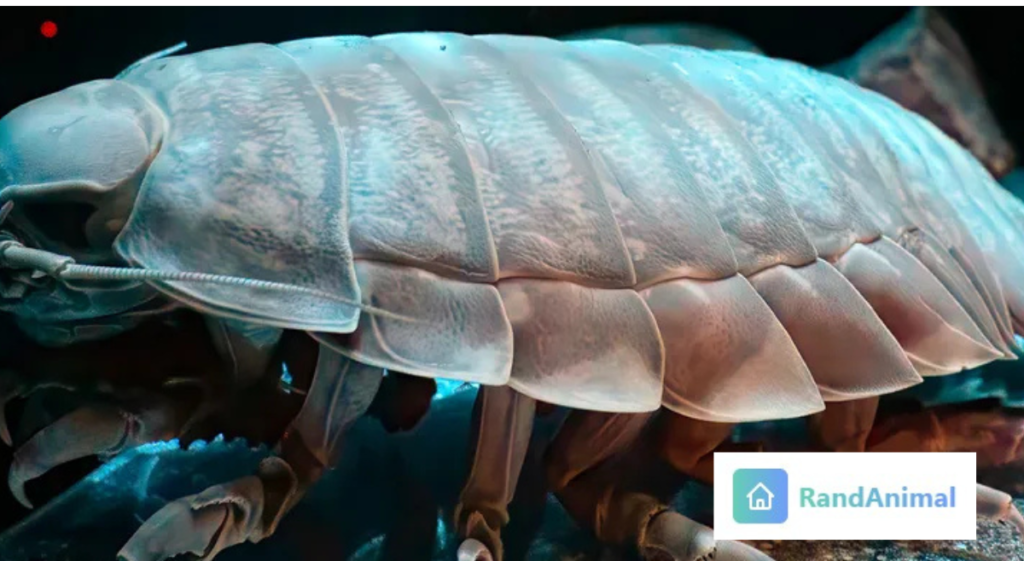
What makes it unsettling is not its appearance but its biology. It can consume an enormous meal in one sitting, then go years without eating again. One specimen in captivity survived over four years without a single meal before dying, still refusing food. The giant isopod looks like a woodlouse the size of a football. It can grow up to 50 centimeters long and lives on the seafloor between 170 and 2,500 meters deep. Its hard outer shell is made of overlapping plates that protect it from attack, and it can roll itself into a tight ball when threatened.
It is a scavenger. When a large animal like a whale or a fish dies and sinks to the ocean floor, giant isopods gather around it in large numbers and begin feeding. They can eat a huge amount in one sitting and then go without food for years. One giant isopod kept in captivity survived more than four years without eating a single meal.
The Deep Ocean Still Has Secrets
Scientists have explored only a small part of the deep ocean. Every expedition brings back animals that were previously unknown. Some are strange-looking. Some are larger than expected.
The ten animals on this list are notable for different reasons. But all of them are adapted to the extreme environment they live in. The deep ocean has shaped them over millions of years. And in that environment, every one of them is a successful survivor.
Conclusion
The deep ocean remains one of the least explored environments on Earth, yet it is already known to host some of the most unusual and highly adapted creatures ever discovered. From glowing lures to oversized jaws and extreme survival strategies, each species is shaped by darkness, pressure, and scarcity of food.
The deep ocean is not a dead zone. It is a fully functioning world shaped by millions of years of pressure, darkness, and scarcity, and every animal on this list is proof that life does not need comfortable conditions to become extraordinary. What has already been found should make you wonder what hasn’t been found yet.
FAQs
1. What is the deepest living animal on this list?
Many of these species can live at extreme depths, but the viperfish, gulper eel, and fangtooth fish are among those found in some of the deepest recorded ocean zones, reaching several thousand meters below the surface.
2. Why do deep-sea creatures have glowing organs?
Many deep-sea animals use bioluminescence to survive in complete darkness. It can help them attract prey, communicate, confuse predators, or lure food closer in an environment where sunlight cannot reach.
3. How do scientists study animals from such deep waters?
Researchers use deep-sea submersibles, remotely operated vehicles (ROVs), and special sampling equipment. Much of what is known also comes from specimens accidentally caught in deep-sea fishing nets or found in predator stomachs.

Ali is an animal enthusiast and wildlife writer with a passion for making nature science easy to understand. He has been researching and writing about animal behavior and biology for over 3 years.