
The deep ocean covers more than 80% of Earth’s seafloor, and most of it has never been seen by human eyes. For centuries, sailors reported monsters rising from the dark water beneath them. They were not entirely wrong. Science has since confirmed creatures so unusual in structure, behavior, and appearance that they challenge every assumption about what life is supposed to look like. These are not myths.
They are real, documented species living in one of the most extreme environments on the planet, and some of them look less like animals and more like something that evolved on an entirely different world. Learn more in Deep Sea Creatures That Glow in the Dark, where you can explore how bioluminescent animals survive and thrive in the deepest, darkest parts of the ocean.
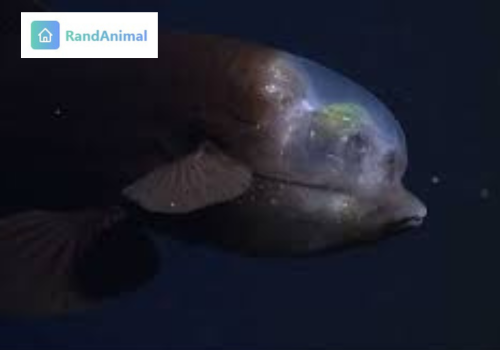
Barreleye Fish (Macropinna microstoma)
The barreleye fish is among the most startling creatures ever retrieved from the ocean. It’s covered by a completely transparent, filled dome, which sits atop its head. Two bright green tubular eyes are visible through the dome that is looking straight upward. Its eyes have a distinctive green luminescence and can turn forward or upward in whichever direction hunting requires, rotating freely within the dome.
Scientists, however, didn’t know that the transparent dome existed for decades. All specimens recovered from the surface burst on ascent because of the pressure changes experienced during the ascent. The first time the dome was observed in its natural habitat was in 2004 when researchers on the Monterey Bay Aquarium Research Institute’s remotely operated vehicle spotted a live barreleye fish.
The ‘face’ on the front of the fish has ‘eyes’ which are actually olfactory organs (smell) on the head. The real eyes are inside the dome, glowing and green, gazing at the water above, for the outline of small animals to eat.
The barreleye fish is found in the Pacific Ocean from 400 to 2,500 metres. It swims almost motionless, scarcely moving, keeping a watchful eye on all above it with its incredible rotating eyes.
Goblin Shark (Mitsukurina owstoni)
The goblin shark is a nightmarish-looking fish. Has a long, narrow face extending well beyond the jaw, and a long, narrow snout. Its skin is light pink, as it has blood vessels running close to the skin. The most disturbing characteristic of it is its jaw. The goblin shark can extend its lower jaw out of its mouth in a lightning-quick strike, much longer than any other known shark species.
This jaw projection occurs so rapidly that the camera doesn’t get a good shot of it. Scientists think this is a tactic the goblin shark employs because they can’t rapidly swim to capture those that move quickly.
The goblin shark has been discovered at depths of 270–more than 1,300 metres in the oceans worldwide. It has an ancient history of at least 125 million years, and is considered a its most defining feature, a jaw that launches completely outside the skull to strike, has no equivalent in any other living shark species.
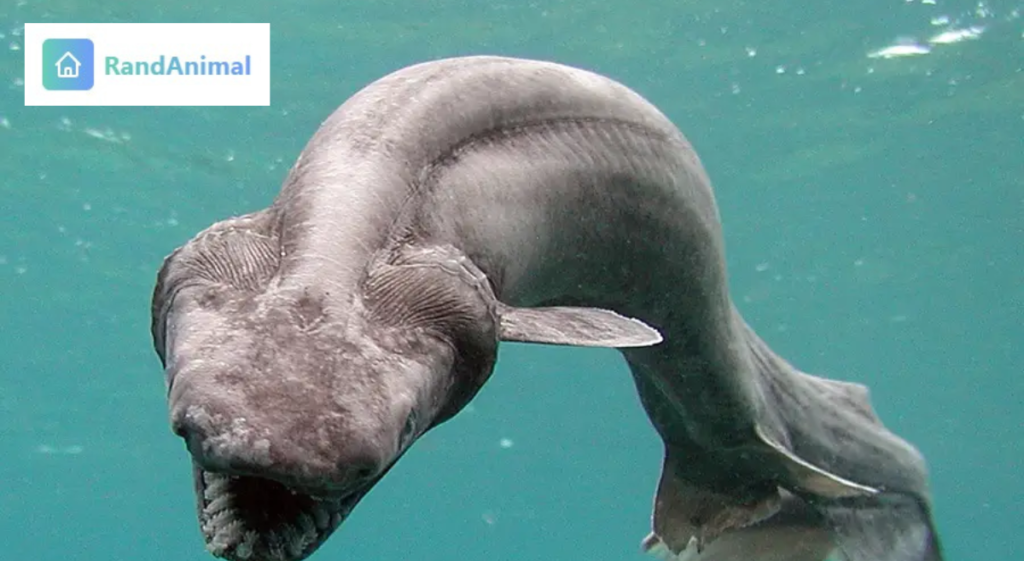
Frilled Shark (Chlamydoselachus anguineus)
Another ancient predator to have survived almost unchanged for millions of years is the frilled shark. It is long and skinny, and looks more like an eel than a shark. Can grow up to 2 m long and swims in the water by bending its side-to-side body like a snake.
The most outstanding characteristic is its mouth. The frilled shark’s teeth come in 25 rows, about 300 total. There are 3 sharp points to each tooth. The mouth is located at the front of the head, not underneath – unusual for a shark. The gills are edged in red, frilly leaves, and this gives the animal its name and its appearance almost mythical in nature.
The frilled shark is found at depths of 120–1,500 metres. It hunts mostly for squid by bending its body and lunging like a snake. Its unusual form has often been linked to early sea serpent legends.
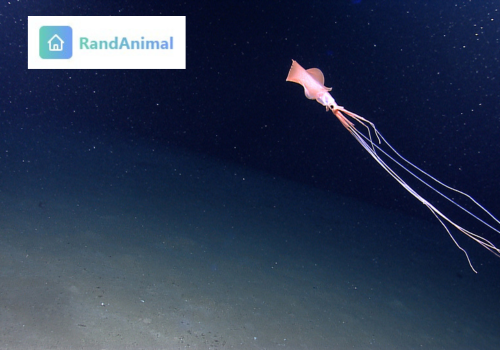
Bigfin Squid (Magnapinna)
It wasn’t until 2001 that the bigfin squid was scientifically confirmed, and it remains one of the least understood deep-sea animals. It has been sighted in oceans worldwide at depths of up to around 4,700 metres, but only rarely captured on camera.
The distinguishing features of the bigfin squid are its extremely long arms and tentacles. These extend outward and then bend downward at sharp angles, creating a trailing, string-like appearance that can stretch several meters behind the body.
Its feeding habits remain a mystery. The long trailing limbs may help it capture small drifting organisms, but no one has observed it hunting clearly. Each sighting raises more questions than answers.
Telescope Octopus
The telescope octopus is completely see-through. It is translucent in its body, arms, and internal organs. Its tubular eyes face upward like periscopes, and are the only clearly visible parts of its body.
Unlike most octopuses, it does not live on the seafloor. It floats in open water at depths of 500 to 2,000 metres, where being transparent acts as perfect camouflage in the empty darkness.
Very little is known about its feeding habits or reproduction because it has been rarely observed in a condition suitable for study.
Sarcastic Fringehead (Neoclinus blanchardi)
The sarcastic fringehead is not a deep-sea animal by depth, living as shallow as 3 meters, but its threat display is so anatomically extreme it belongs on any list of ocean creatures that defy normal biology. The sarcastic fringehead is found at depths of 3 to 73 m off the coast of California and looks almost alien when threatened. When calm, it stays hidden inside small burrows, bottles, or rock crevices.
When disturbed, it opens its massive mouth suddenly, transforming into a dramatic and intimidating display. Two fringeheads may even fight by pressing their open mouths together in a territorial “mouth wrestling” match, where the larger mouth wins. The inside of its mouth can appear brightly colored in yellow, orange, and blue, making the display even more striking.
Coffinfish (Chaunax pictus)
Coffinfish belongs to the sea devil family and lives at depths of 75 to 470 metres in the Indo-Pacific region. It has a soft, rounded, spiky-looking body and a permanently frowning face.
It uses its small pectoral fins to “walk” along the seafloor rather than swim. When threatened, it inflates its body with water to appear larger and harder to swallow.
It also has a modified spine on its head that acts as a lure to attract prey, similar to anglerfish. It waits motionless until small fish or crustaceans come close enough to strike.
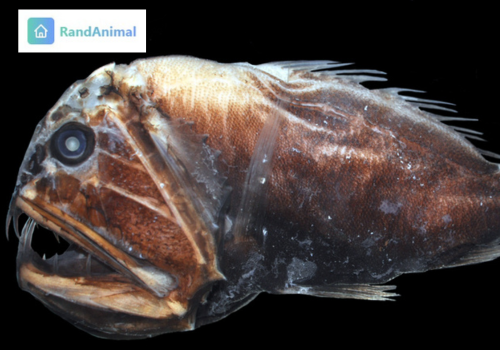
Fangtooth Fish (Anoplogaster cornuta)
The fangtooth fish has some of the largest teeth in proportion to body size of any fish in the ocean. Despite being only about 16 cm long, its teeth are so large that special pockets in its head allow it to close its mouth.
It lives at depths between 200 and 5,000 metres. It is dark-colored and blends into deep water, with its pale teeth being one of the few visible features in the faint light.
Although its appearance is terrifying, it is harmless to humans and is rarely encountered outside deep-sea research.
Ping Pong Tree Sponge (Chondrocladia lampadiglobus)
Unlike most sponges, the ping pong tree sponge is a predator. It lives at depths of 2,500–3,000 metres in the Pacific Ocean and has a branching structure ending in ball-like tips resembling ping pong balls.
These tips contain microscopic silica hooks that trap tiny crustaceans and other organisms. Once caught, the sponge slowly envelops and digests its prey over time. It was only discovered in 1995, making it one of the more recent strange discoveries of deep-sea life.
Sea Pig (Scotoplanes globosa)
Sea pig is a type of sea cucumber found in abyssal plains at depths of 1,000 to 5,000 metres. Its soft, pale body rests on tube-like feet that resemble stubby legs, giving it a pig-like appearance. It moves across the seafloor in large groups, searching for organic material in sediment.
It uses specialized feet to detect food particles falling from above. Sea pigs are important in deep-sea ecosystems because they help recycle organic matter. Some even carry parasitic crustaceans called isopods.
Why the Deep Ocean Makes Such Weird Creatures
These extreme conditions have produced animals that seem to defy normal expectations of life. The deep ocean has led to adaptations such as transparent bodies, extendable jaws, rotating eyes, glass-like hooks, and extremely long trailing limbs.
With each new deep-sea expedition, new and previously unknown species continue to be discovered. Scientists believe most deep-sea life is still undiscovered, meaning the ocean may hold even stranger organisms than those already known.
FAQs
1. Why do deep-sea animals look so strange?
Because they live in extreme darkness, pressure, and cold, they evolve unusual features like glowing bodies, large teeth, or transparent skin to survive and hunt efficiently.
2. How deep do most of these creatures live?
Many deep-sea species live anywhere from a few hundred meters to over 5,000 meters below the ocean surface, where sunlight cannot reach.
3. Are deep-sea creatures dangerous to humans?
Most deep-sea animals are harmless to humans because they live far below the surface and rarely interact with people.
Final Thoughts
The deepest oceans are the largest and least explored habitats on Earth. Life here has evolved in complete darkness, freezing temperatures, and extreme pressure, producing forms that seem almost alien. These traits are not random oddities but precise adaptations shaped over millions of years. Each species reflects the creativity and resilience of life under extreme conditions.
Studying these creatures not only reveals how life survives in extreme environments but also reminds us how little of our own planet we have truly explored. Learn more in Strongest Deep Sea Creatures Ever Found. The same pressures that shaped these animals into biological outliers are still at work today, in depths we have barely touched.

Ali is an animal enthusiast and wildlife writer with a passion for making nature science easy to understand. He has been researching and writing about animal behavior and biology for over 3 years.