
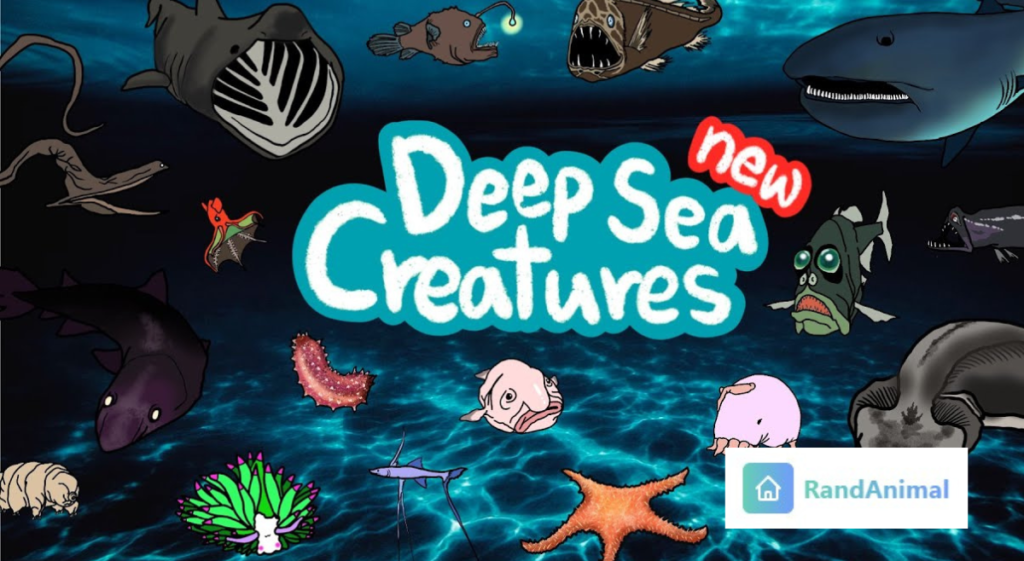
The deep ocean is one of the least explored places on Earth, and some of its most powerful predators have never been seen alive by humans. Below 200 meters, where sunlight disappears and pressure becomes crushing, a completely different kind of hunter exists. This article breaks down the most powerful predators hiding in the deep ocean, what makes each one dangerous, and why scientists are only beginning to understand them. Read More about The Deepest Sea Creatures Ever Discovered by Science
Why Are Deep-Sea Creatures So Strong?
In the deep ocean, strength doesn’t mean size. It means surviving conditions that would kill almost anything else. Pressure hundreds of times greater than at sea level. Temperatures near freezing. Zero light. Scarce food. The predators that thrive here have evolved specific weapons — crushing jaws, lightning-fast strikes, electric sensing, and grip strength that doesn’t let go. Each one on this list is powerful in a different way.
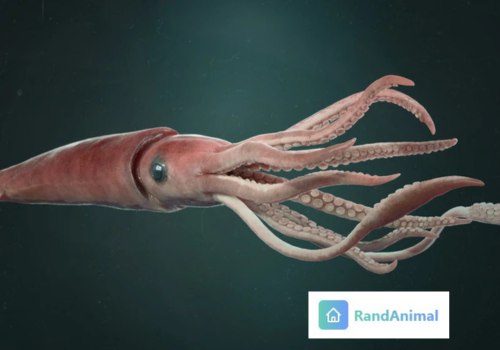
Giant Squid (Architeuthis dux)
The giant squid is one of the ocean’s most elusive hunters. It lives between 300 and 1,000 meters deep and can reach over 40 feet in length, with scientists suspecting even larger ones exist further down. Its eight arms and two long tentacles are lined with sharp-edged suckers that lock onto prey and don’t release. Its eyes, roughly the size of a dinner plate, are the largest of any animal on Earth built specifically to detect movement in near-total darkness. Sperm whales hunt giant squid, and the scars found on whale skin tell the story of how hard the squid fights back.
Sperm Whale (Physeter macrocephalus)
The sperm whale is the largest toothed predator on Earth, reaching over 65 feet in length and weighing more than 50 tons. What makes it remarkable isn’t just its size — it’s what it does with it. It dives to depths of 7,000 feet, stays submerged for over an hour, and hunts giant squid in complete darkness using echolocation precise enough to locate a single animal in open water. Its cone-shaped teeth and powerful jaw do the rest. No other mammal hunts this deep, this effectively, or against prey this size.
For example, fish have unique resting patterns that differ greatly from human sleep. Do Fish Sleep? Here’s How and Where Fish Actually Rest explains how and where fish recover underwater.
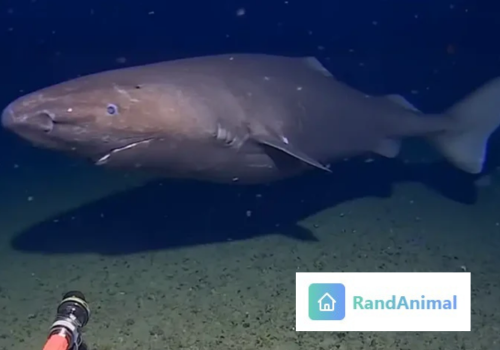
Sleeper Shark (Somniosus spp.)
Its jaws are strong enough to tear through squid, other sharks, and marine mammals. Stomach contents from captured specimens have confirmed all three. What makes it particularly effective is its flexibility: it actively hunts when prey is available, and scavenges when it isn’t. In an environment where food is scarce and unpredictable, that adaptability is its greatest strength.
Mantis Shrimp (Order Stomatopoda)
The mantis shrimp shouldn’t be on a list of ocean predators until you see what it can do. At around 12 inches long, it has one of the fastest and most powerful strikes in the entire animal kingdom. Its club-like appendages accelerate faster than a bullet, hitting at over 50 miles per hour with enough force to shatter crab shells and crack aquarium glass.
The strike also creates a cavitation bubble, a shockwave of collapsing pressure that can stun or kill prey even when the punch itself misses. Size for size, nothing in the ocean hits harder. Their punch can reach speeds over 50 miles per hour and can break crab shells and even aquarium glass. This strike creates a shockwave called cavitation, which can stun or kill prey instantly.
Colossal Squid (Mesonychoteuthis hamiltoni)
Living in the deep Southern Ocean near Antarctica, it can weigh over 1,000 pounds and carries something the giant squid doesn’t: rotating hooks on its tentacles that dig in and turn, making it nearly impossible for prey to pull free. Its eyes are larger than a soccer ball, built for hunting in the darkest, coldest water on Earth. Scientists have studied very few live specimens, but what they have found places it among the most powerful invertebrates ever recorded.
| Creature | Length | Main Strength |
| Giant Squid | 40+ ft | Powerful tentacles |
| Sperm Whale | 60+ft | Massive size and hunting ability |
| Mantis Shrimp | 12 in | Fastest strike |
| Colossal Squid | 1,000+ lbs | Powerful hooks |
Goblin Shark (Mitsukurina owstoni)
The goblin shark has existed in some form for over 125 million years, and its hunting method is unlike anything else on this list. It moves slowly through deep water, using a long, electroreceptive snout to detect the faint electrical signals produced by nearby prey. When it gets close enough, its jaw launches forward outside its skull in a split-second lunge, snatching prey before it has any chance to react. It doesn’t need speed or size.
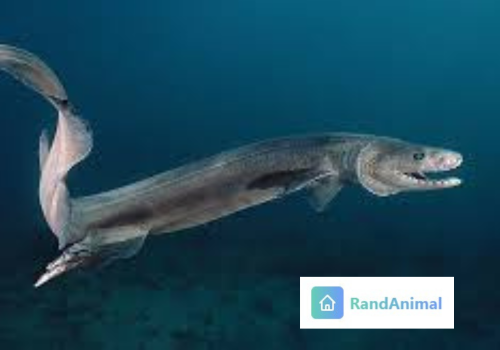
Frilled Shark (Chlamydoselachus anguineus)
The frilled shark looks like a creature from the prehistoric world. It has an eel-like body and rows of sharp, three-pronged teeth that give it a terrifying appearance. It moves through the deep ocean by flexing its long, flexible body like a snake, allowing it to strike prey quickly and without warning. When it attacks, it opens its jaw wide and uses its backward-facing teeth to grip its prey tightly, making escape almost impossible once the victim is caught.
Its primitive appearance has changed little over millions of years, giving scientists valuable insight into shark evolution. It actively hunts squid, fish, and other deep-sea creatures, using sudden bursts of speed to surprise anything that comes too close.
Humboldt Squid (Dosidicus gigas)
The Humboldt squid lives in the Pacific Ocean and can grow up to 5 feet long. It is widely known for its aggressive behavior and powerful hunting skills, making it one of the most feared ocean predators in its range. Humboldt squid are highly intelligent and rely on rapid communication through color changes during group hunting.
It actively hunts in groups, moving together to surround and overwhelm prey. In some cases, it attacks large fish and has even been known to approach divers or interfere with fishing boats due to its bold nature.
It uses a sharp, beak-like mouth along with strong, sucker-lined arms to grab, tear, and consume its prey. During hunting, it rapidly changes color across its body, which it uses to communicate with other squid and coordinate attacks more effectively.
Anglerfish (Order Lophiiformes)
The anglerfish is not the largest predator, but it is one of the most effective. Many deep-sea anglerfish species use bioluminescent bacteria to produce the glow that attracts prey.
It has a glowing lure on its head that attracts prey in the dark, deep sea. When prey comes close, it strikes quickly with sharp inward-pointing teeth. It can also swallow prey larger than itself thanks to its expandable stomach, a key survival adaptation in the deep ocean.
FAQs
What is the strongest animal in the deep sea?
The sperm whale is often considered one of the strongest due to its size, intelligence, and hunting ability.
What adaptations do deep-sea creatures have?
Deep-sea creatures are adapted to survive extreme cold, pressure, and darkness. These include special senses, bioluminescence, and powerful hunting abilities.
Are scientists still discovering deep-sea life?
Yes, scientists continue to discover new species, and much of the deep sea remains unexplored.
How deep do deep-sea creatures live?
Many deep-sea creatures live below 650 feet (200 meters), while some species inhabit depths exceeding 13,000 feet (4,000 meters), where sunlight cannot penetrate.
Final Thoughts
Deep-sea creatures are not only fascinating but also essential for ocean ecosystems. They help maintain balance in food chains, recycle nutrients, and support marine life. With climate change and human activity reaching deeper waters, scientists are still studying how these creatures survive. Many species likely remain undiscovered.
The deep sea remains one of the most mysterious and extreme environments on Earth, filled with powerful and extraordinary life forms. As exploration technology improves, scientists continue to discover new species and learn more about how these animals survive in conditions once thought impossible for life.

Ali is an animal enthusiast and wildlife writer with a passion for making nature science easy to understand. He has been researching and writing about animal behavior and biology for over 3 years.