
The ocean covers most of our planet, yet some of its deepest places remain almost completely unknown to us. As you go deeper underwater, sunlight fades away. The water gets colder. The pressure increases and becomes strong enough to crush most living things instantly. Despite all of this, scientists keep finding life surviving and even thriving at depths that once seemed completely impossible.
In this article, we will explore some of the deepest-sea creatures ever discovered. We will also look at the trenches where they were found. Finally, we will examine the real numbers behind these incredible discoveries.
We will also look at how scientists keep breaking these depth records, sometimes within just the last couple of years. Explore the Strongest Deep-Sea Creatures Ever Found and discover how they survive crushing pressure, darkness, and extreme underwater conditions.
The Mariana Trench, The Deepest Place On Earth
Before talking about the creatures themselves, it helps to understand where most of these discoveries happen. The Mariana Trench, located in the western Pacific Ocean near Guam, is the deepest known place on the entire planet.
According to Wikipedia, its lowest point, called the Challenger Deep, has been measured at depths ranging from around 10,902 to 10,916 meters, which is close to 36,000 feet below the surface.
For comparison, that is deeper than Mount Everest is tall. If you placed the tallest mountain on Earth in the deepest part of the ocean. It would not reach the surface. Its peak would still be more than a mile underwater.
The Mariana Snailfish
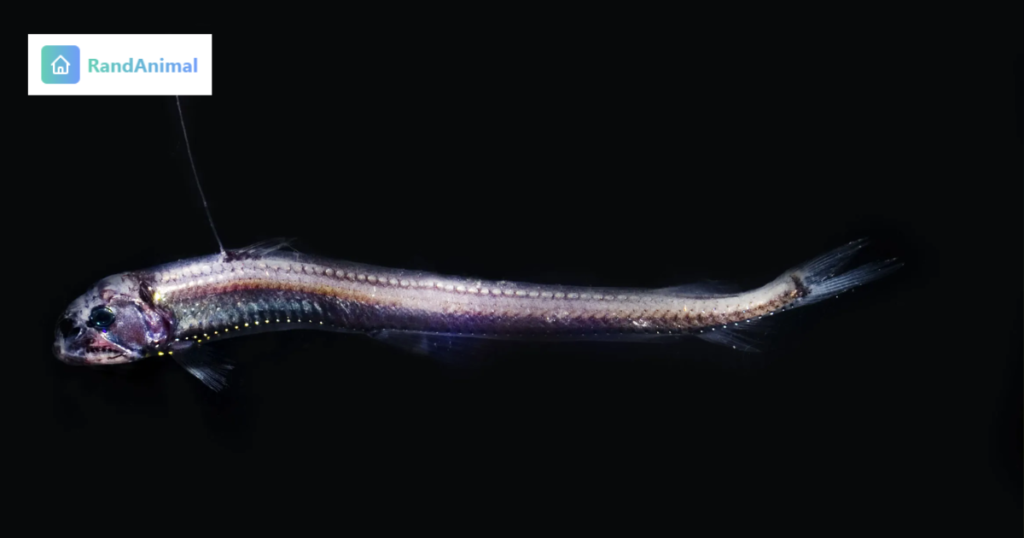
For a long time, the title of deepest fish ever recorded belonged to the Mariana snailfish, officially named Pseudoliparis swirei. According to a wildlife and science publication, this small, pale, almost see-through fish was discovered in 2017 at a depth of around 8,000 meters inside the Mariana Trench.
It was named after Herbert Swire. He was a navigation officer. He joined the HMS Challenger expedition in the 1870s. The expedition led to the discovery of the Mariana Trench.
According to Wikipedia, an earlier snailfish of the same general type was filmed even deeper. It was recorded at a depth of 8,178 meters. This happened during a 2017 expedition. At the time, it briefly set a new record. It became the deepest living fish ever filmed on camera.
These fish feed on tiny shrimp-like crustaceans. The crustaceans drift along the seafloor. They often cluster together in small groups. The fish hunt them in the darkness.
The Izu Ogasawara Trench Snailfish
For years, the Mariana Trench held the record. It had the deepest fish ever filmed. Later, this changed. Researchers explored a different trench. According to the Natural History Museum, scientists filmed a snailfish from the genus Pseudoliparis. It was filmed at a depth of 8,336 meters. This was in the Izu Ogasawara Trench near Japan. It broke the previous deepest fish record. The record was broken by 158 meters.
According to a report from IFLScience, the expedition was led by Professor Alan Jamieson. He was from the Minderoo UWA Deep Sea Research Centre. The team made another interesting discovery. They found that the Izu Ogasawara Trench is slightly warmer than the Mariana Trench.
This small temperature difference seems to support more life. As a result, the Izu Ogasawara Trench is more biologically rich. This is true even though both trenches are extremely deep and harsh environments.
According to NOAA Ocean Exploration, this snailfish was found more than six times deeper than the original snailfish discovery. That first discovery amazed scientists. Researchers now believe there is a physical limit for fish. It may lie between 8,200 and 8,400 meters below the surface. Below this depth, no fish with a backbone may be able to survive. The crushing pressure is simply too great.
What Lives Even Deeper Than Fish
While 8,336 meters seems close to the limit for fish, life still exists deeper. This does not mean nothing lives below that depth. According to NOAA, creatures have been found deeper. These creatures are invertebrates. Invertebrates are animals without a bony skeleton. Examples include sea cucumbers. They also include small crustaceans called isopods.
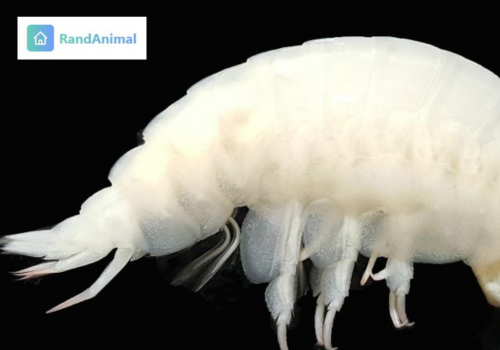
One especially interesting group of deep-sea survivors is amphipods, small shrimp-like scavengers that thrive in some of the most extreme depths on Earth. According to a report from Discover Magazine, one unusually large species of amphipod called Alicella gigantea can grow up to 13 inches long, making it a true giant compared to its relatives living in shallower water.
These amphipods survive by scavenging organic material. The material drifts down from the surface. It slowly sinks through the ocean. The journey can take weeks or months. It eventually reaches the deepest ocean floor.
Cusk Eels
Cusk eels are another remarkable example of deep-sea survival. According to Discover Magazine, these fish have been recorded at depths beyond 27,000 feet, despite closely resembling eels while actually being more closely related to tuna and seahorses.
What makes cusk eels especially unusual is their range. Unlike most deep-sea specialists, cusk eels can also be found in much shallower waters, giving them one of the widest depth ranges of any fish species on the planet. How Long Do Baby Elephants Stay with Their Mothers?
According to the Natural History Museum, one of the earliest deep-sea fish ever caught was a cusk eel species named Abyssobrotula galatheae, originally caught in 1901, with a deeper specimen later recorded at 7,160 meters during the 1950s.
Thousands Of Creatures Discovered Living Nearly 10 Kilometers Deep
One of the most exciting recent discoveries happened in 2025, when researchers using a Chinese submersible found an enormous, thriving community of animals living almost 10 kilometers below the surface inside the Mariana Trench.
According to a report from Phys.org, this discovery included thousands of worms and mollusks, along with spiky crustaceans, free-floating marine worms, sea cucumbers, and feathery armed sea lilies, making it the deepest and most extensive community of its kind ever observed on Earth.
What makes this discovery especially fascinating is how these creatures manage to survive without any sunlight at all. According to Phys.org, almost all life on our planet depends on energy from the sun, but these deep-sea communities instead rely on a process called chemosynthesis, where microbes convert chemicals such as methane, seeping up through cracks in the seafloor, into usable energy. This essentially creates an entire food chain that has nothing to do with sunlight whatsoever.
The Submersible That Made It Possible
Many of the most recent discoveries in the Mariana Trench were made possible by a Chinese submersible called Fendouzhe, which translates to Striver. According to Wikipedia, this submersible reached the bottom of the Mariana Trench in November 2020, at a depth of 10,909 meters.
It later returned to the trench in 2024, completing 23 separate dives and reporting thousands of marine tubeworms and mollusks at depths ranging from roughly 8,200 feet down to an astonishing 31,000 feet.
According to Wikipedia, research published in the scientific journal Cell during 2025 also identified more than 7,000 new microbial species living in the Mariana Trench, with around 89 percent of them being entirely discovered that had never been documented by science before.
A Question People Often Ask
A question that comes up often when people learn about these discoveries is how anything can survive the crushing pressure found at these extreme depths without simply being flattened. The honest answer involves a mix of biology and chemistry. Many deep-sea creatures lack rigid, air-filled body parts like the swim bladders found in many shallow-water fish, which would normally collapse violently under intense pressure.
Instead, their bodies are often soft, flexible, and filled with fluids that are not easily compressed, allowing the pressure outside their body to roughly match the pressure inside their body. Some species also rely on special proteins and fats in their cell membranes that remain flexible and stable, even under conditions that would damage cells belonging to creatures living closer to the surface.
Why These Discoveries Keep Happening So Quickly
It might seem surprising that so many of these depth records have been broken within just the last few years, but this mostly comes down to advancing technology rather than these creatures suddenly appearing out of nowhere.
According to the Natural History Museum, the deep seafloor could be up to three times as diverse as the upper layers of the ocean. Much of this diversity is still unknown to science.
Modern expeditions use remotely operated vehicles. They also use baited camera traps. They use specially designed landers as well. These tools can withstand extreme pressure. They allow scientists to reach deep ocean areas. These areas were impossible to study a few decades ago.
As these tools improve, more discoveries are expected. Researchers believe there will be more record-breaking findings. This is because much of the deep ocean is still unexplored.
FAQs
1. Why are deep-sea organisms important to science?
Deep-sea organisms help scientists discover new biological processes, survival mechanisms under extreme pressure, and potential applications in medicine, industry, and environmental science.
2. How do deep-sea creatures survive extreme pressure?
They have special biochemical adaptations such as pressure-resistant proteins, flexible body structures, and unique chemicals that prevent cell damage under extreme conditions.
3. Can deep-sea ecosystems help fight climate change?
Yes. Deep-sea environments store large amounts of carbon and help regulate Earth’s climate by trapping carbon in sediments and supporting long-term carbon cycling in the ocean.
Final Thoughts
The deepest parts of our oceans remain one of the last truly unexplored frontiers on planet Earth, and every new expedition seems to reveal life surviving in places that once seemed completely impossible to inhabit.
From the pale, ghost-like Mariana snailfish, to record-breaking discoveries in the Izu Ogasawara Trench, to entire thriving communities of worms and mollusks living almost 10 kilometers beneath the waves, these discoveries continue to reshape what scientists thought they knew about the limits of life itself.
As exploration technology keeps improving, it seems likely that science has not yet found the true limit of how deep life can go. Somewhere down in the darkest, most crushing depths of our planet’s oceans, there may be creatures still waiting to be discovered for the very first time. Read More about Do Fish Sleep? Here’s How and Where Fish Actually Rest explains how and where fish recover underwater.

Ali is an animal enthusiast and wildlife writer with a passion for making nature science easy to understand. He has been researching and writing about animal behavior and biology for over 3 years.