
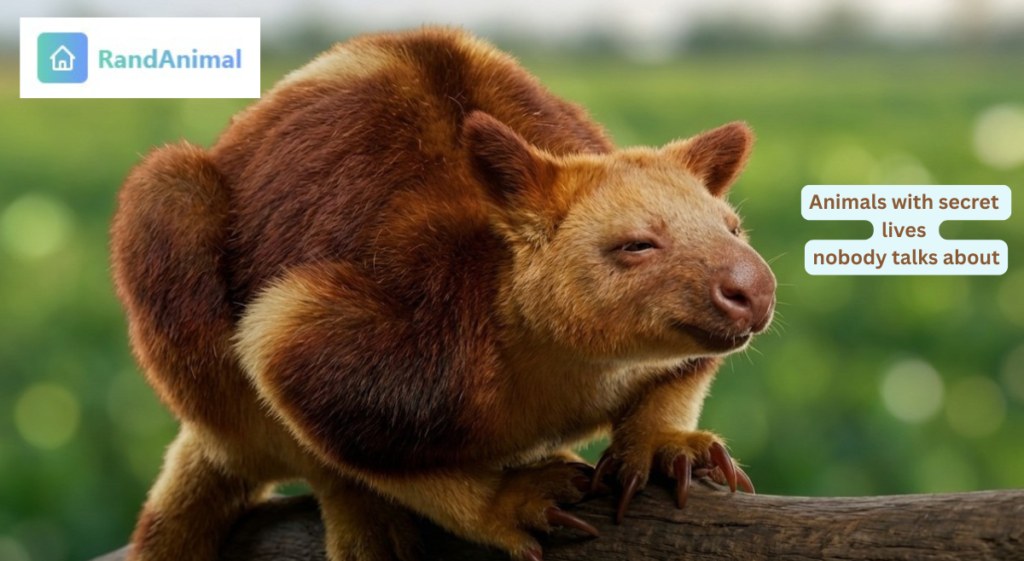
We share this planet with millions of species, yet most of us only ever scratch the surface of animal behavior. The real problem? Science textbooks and nature documentaries keep showing us the same lions, dolphins, and eagles, leaving the most fascinating stories untold.
Animals with secret lives nobody talks about are quietly outsmarting predators, forming complex friendships, and solving problems in ways that challenge everything we think we know about intelligence and survival.
This article dives deep into those overlooked stories: the hidden rituals, surprising social lives, and bizarre survival tactics of creatures flying completely under the radar. Read More about Top 10 Scariest Deep Sea Animals Ever Discovered.
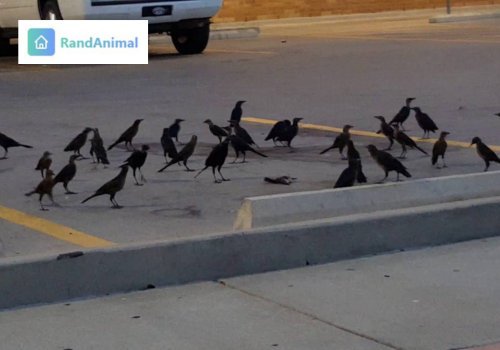
Crows Hold Funerals
When a crow dies, the flock does not scatter. Dozens of crows land quietly near the body and remain there for several minutes, silent and watchful. The crows congregate around the dead crow to try to determine the cause of its death. They are on the lookout for danger. They can recall where it is. Following the gathering, crows stay away from that place for weeks.
Those who did show up appear to have taken the information on board and put it into action in the future. This was done by using a decoy crow, which was dead, but put in an area where the live crows were foraging. For a long time following, crows that witnessed the scene refrained from frequenting that location, despite the presence of food.
Those who did not see the body returned to their place of origin as before. This appears to be a funeral, but it is actually a Safety Meeting. However, among all birds, it is one of the most organized and deliberate group behaviours that can be observed.
Squirrels Act Like They Are Burying Food
Squirrels imitate burying food. Nuts and seeds are stored in the ground to be eaten later by squirrels. This is a well-known fact to most. Most people don’t realize that squirrels also pretend to bury if they suspect that another animal is observing.
When a squirrel sees another animal watching him or her and is carrying food, it will make a small hole, look like it can drop the food in, cover it carefully, and then proceed to walk away. Food remains in their mouth or in another place. The entire show is a ruse to deceive the watcher into going to the wrong place.
The “trick” involves the squirrel knowing that the animal is observing him/her and that it is hoping for food; deciding to trick the animal; executing a convincing physical act; and remembering where the actual food is located.
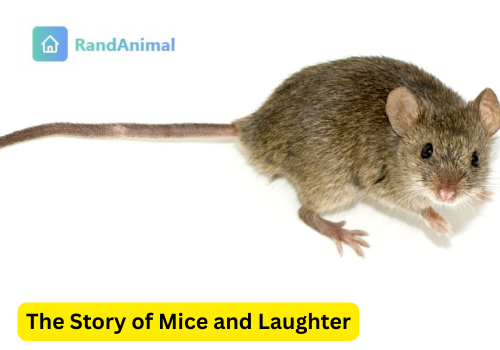
The Story of Mice and Laughter
Laughter for mice. Mice make noises that can only be heard with special equipment that is outside the range of human hearing. Researchers found that mouse tinkling calls are made at a very high frequency when mice are tickled or playing. If the calls are slowed down enough to be audible to humans, they sound a lot like laughter. Meet the 10 deep-sea animals that look like aliens, real, scientifically verified creatures so alien in design. Learn more in Deep Sea Creatures That Glow in the Dark, where you can explore how bioluminescent animals survive and thrive in the deepest, darkest parts of the ocean.
Tickling is also a favorite activity of mice. Mice actively follow the researcher’s hand around; tickled by the researcher, they are looking for more. They make the same noises when they chase an object that they like chasing and when they rough-play with other mice.
The vocalizations cease if the mouse is stressed or when it is taken out of its own habitat. They come back when the mouse is safe and is doing something that it likes. This implies that the sounds are more likely to be a response of a positive emotional state and not purely a random reaction to physical contact.
Dolphins Can Communicate With One Another
All dolphins have an individual whistle. Other dolphins find out that a whistle can be used to get that dolphin’s attention. These signature whistles are called by scientists “names” and are described as such.
Researchers played dolphins recorded whistle notes and discovered that a dolphin reacts to the sound of his/her whistle but not to others. A dolphin will respond to its whistle when it is played back. It responds to the whistle of its known dolphin, too.
Dolphins that have been separated from a pod have been known to call out the characteristic whistle of the missing dolphin. The calls are repeated until they get a response or they gather together again. This is the only time other than for humans that anyone has been called by name.
Comforting Elephants
When elephants are upset, they act in much the same manner as humans do when comforting a friend who is upset. If one elephant of a group exhibits fear or anxiety, other elephants in the group gather around the first elephant. They put their trunks to their mouth. They make “rumbling” noises. Remain close until the distressed animal has calmed down.
Observing groups of elephants over the years, it was discovered that this comforting behavior was deliberate and occurred consistently. The elephants that approached an upset elephant were not just moving towards the distressed elephant, but rather, they had a good reason to. They were particularly looking for the distressed one.
They put their hands on sensitive areas of elephants, such as their face and mouth. The comforting elephants exhibited physical stress as well when a companion was stressed, the researchers wrote. Stress levels increased for them when another elephant became stressed.
Such an emotional connection, as one person’s body reacts to another person’s emotion, is uncommon among species other than humans.
Octopuses Collect Objects and Decorate
Octopuses carry objects. They collect shells, rocks, and debris and carry them through these. The scientists long believed that this was all about protection. When an octopus is frightened, it can squeeze its shell around itself.
However, researchers in the wild saw something more than just tool use in octopuses. Some of the octopuses that were captured took items they did not use for defense. They organized things near their dens’ entrance. They transported some items long distances, even when other similar items were readily available.
One species of octopus in Indonesia was observed in 2009 picking up coconut shell halves and moving them across the seafloor. When it was ready to hide, it put the two halves around itself to form a ball. This was the first record of the use of an invertebrate’s tool for a future and not an immediate use.
Its collection habits, particularly when there is no apparent survival need, indicate that octopuses do more than just instinctively respond to their surroundings.
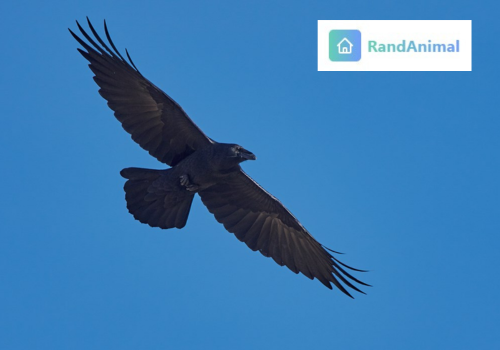
Ravens Plan Ahead
Ravens are problem solvers. This is somewhat common knowledge. There is much less known that ravens can make plans for the future that most animals can’t.
Ravens have been taught to use a tool to open a container in one study to obtain food. The box was removed at that time. After an hour, the ravens were presented with a useful tool, but with some other objects with which they could not open the box. Although the box was not there and they didn’t need it right away, most selected the appropriate tool.
In another test, ravens were shown a smaller reward that they could eat immediately, but they were also allowed to retain a token that would allow them to receive a larger reward at a later time.
In fact, the idea that humans and great apes are the only creatures capable of such planning, taking a present action based on a future goal, was once thought to be impossible. Ravens appear to deal with it quite easily.
Bees Make Decisions Together
If it’s time for a new home, the queen isn’t the one deciding for the colony. It is a process similar to voting, which the worker bees undertake in co-constructing.
Scout bees go out and scout for potential nesting areas. When a scout locates a good site, it returns to the hive and performs a waggle dance to relay information on what it detected. The longer and more vigorous the dance, the better the site. The other scouts go and see the places being advertised and add their own dances, if they want to.
In the long run, support accumulates for the best option. With sufficient scouts dancing for a particular site, the colony relocates. If no clear decision is made, if the support is not strong enough, the process continues until a clear decision is made.
The colony doesn’t move until there is a good agreement. There is no final say of one individual bee. The decision is made by the group, and the group will only act if the evidence is one-sided.
Rats Come Together to Help Each Other
Rats are known to be pests. Their social life is different. A rat was placed in a small space which is only opened from the outside in a series of studies. A second rat was allowed to roam freely and could open this space, letting the first rat out. Although there was no reward for opening the door, most rats preferred to open it.
The free rat, who finds chocolate very attractive, shared chocolate with the rat that he freed, while not eating it on his own. Rats that had previously been trapped were also quicker than untrapped rats to assist a trapped rat in further tests. They were more ready and willing to assist.
The researchers call this “empathy-driven behavior.” The rats who were in the difficult situation themselves were more responsive to another rat in the difficult situation.
Final Thoughts
Although each species on this list behaves differently, they share one important characteristic: the ability to respond to challenges in ways that go beyond simple instinct. Whether it is a crow learning from danger, a raven planning for a future reward, or a dolphin recognizing another individual through a signature whistle, these behaviors demonstrate impressive cognitive abilities.
What makes these behaviors significant is not just that they are surprising. It is that they keep appearing in species we have historically dismissed as simple. Crows remember faces. Rats feel empathy. Bees vote. Every time science looks closely at an animal it assumed was operating on instinct alone, it finds something more. The question is no longer whether animal intelligence exists in complex forms. It is how much of it we have been ignoring.
Frequently Asked Questions
Why do crows gather around dead crows?
Researchers believe crows gather around dead members of their species to investigate potential dangers in the area. These gatherings may help them learn about threats and avoid similar risks in the future.
Can animals plan for the future?
Some animals appear capable of future-oriented behavior. Studies involving ravens, certain primates, and other species suggest they can make choices that provide benefits later rather than immediately.
Do animals experience emotions?
Many animals show behaviors associated with emotional states such as fear, stress, excitement, bonding, and comfort. Scientists continue to study how these emotions compare to human experiences.
How do dolphins recognize each other?
Dolphins use unique signature whistles that function similarly to individual identifiers. These whistles help dolphins recognize and communicate with specific members of their group.
Which animal on this list is considered the most intelligent?
There is no single answer because intelligence can be measured in different ways. Ravens excel at problem-solving and planning; dolphins are known for communication and social intelligence; while octopuses demonstrate impressive tool use and adaptability.

Ali is an animal enthusiast and wildlife writer with a passion for making nature science easy to understand. He has been researching and writing about animal behavior and biology for over 3 years.