
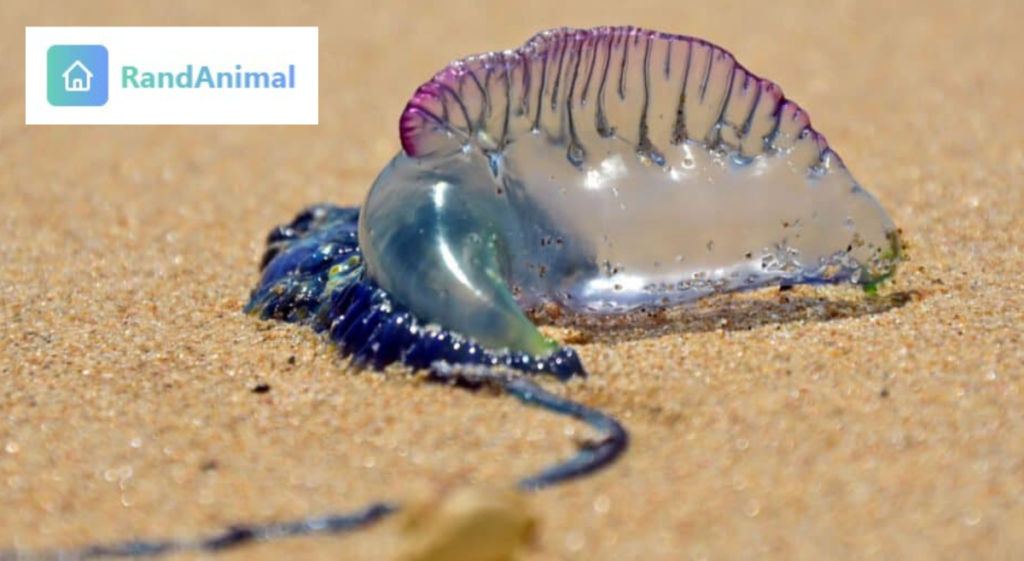
It sounds impossible, but some creatures on Earth are actually living, breathing, and surviving without a single brain cell. Which animal has no brain at all is one of the most mind-bending questions in all of biology.
No brain, no thoughts, no central nervous system, yet these remarkable creatures eat, reproduce, and thrive in ways that leave scientists genuinely puzzled.
In this article, we’ll explore the fascinating species that have mastered survival without a brain, uncover the extraordinary biology behind their existence, and reveal what these brainless wonders teach us about the true nature of life itself. Read about Animals With The Most Teeth In The World.

What is the brain, and Why Don’t Some Animals Have One?
A brain is a central organ that receives signals from the body and the environment, analyzes those signals, and sends instructions back out. It is useful when an animal needs to hunt, escape predators, move quickly, or react to complex changes in its surroundings.
However, not all animals need these abilities. Some filter water for food, absorb nutrients through their body surface, or simply wait for food to come close. For these creatures, maintaining a brain would consume energy without providing much benefit.
While these animals lack a true brain, many still possess simple nervous systems that help them sense and respond to their environment. Scientists study these organisms to better understand how nervous systems evolved and how different forms of life adapt to their surroundings.
Evolution favors what works. If an animal can survive and reproduce successfully without a brain, there is no evolutionary pressure to develop one. As a result, several animal groups have thrived for hundreds of millions of years without a brain.
Let’s look at some of the best-known examples:
Sea Sponges
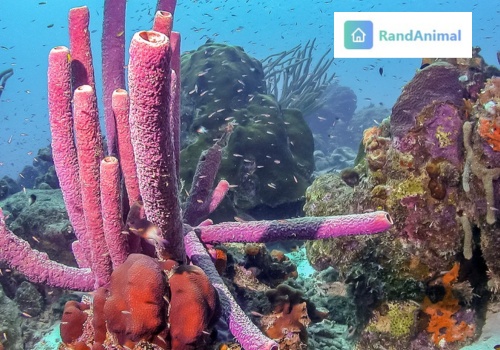
Sea sponges are the most famous example of animals that lack both a brain and a nervous system. They have no neurons, no nerve cells, and no system for transmitting signals throughout the body.
Despite their simplicity, sponges are true animals, not plants. They have existed for at least 600 million years and are among the earliest known animals in the fossil record.
Research in marine biology has shown that sea sponges function without neurons or a centralized nervous system, relying instead on specialized cells to carry out essential life processes.
Specialized cells called choanocytes pull water into the sponge’s body. These cells have tiny hair-like structures that beat rhythmically to create water currents. Water enters through small pores, passes through internal chambers, and exits through a larger opening. During this process, the sponge absorbs oxygen and nutrients.
Everything happens automatically. There is no central control center directing the cells. Each cell functions independently, creating a bottom-up system rather than a coordinated top-down one.
Some sponges can slowly contract in response to touch or changes in water conditions. However, this is not a nervous response. Individual cells react independently, and the process takes minutes rather than milliseconds.
Jellyfish
Jellyfish do not have a brain, but they do have a nervous system. They are included here because many people assume that any animal capable of movement and hunting must have a brain.
Instead of a brain, jellyfish possess a nerve net, a loose network of neurons spread throughout the body. Signals can travel through this network from wherever a stimulus occurs. According to National Geographic, creatures like jellyfish have survived for over 500 million years without a central nervous system, making them one of the oldest animal groups still alive today.
There is no central processing center. No part of the nervous system is in charge of the others. Why Do Cats Bring Dead Animals Home?
The nerve net allows jellyfish to detect light, gravity, chemicals in the water, and touch. When prey contacts a tentacle, the nerve net triggers stinging cells and muscle contractions. The rest of the body responds by moving toward the food source.
Jellyfish evolved more than 500 million years ago and have survived multiple mass extinctions. Some species are even considered biologically immortal because they can revert to an earlier life stage when under stress rather than dying.
Starfish
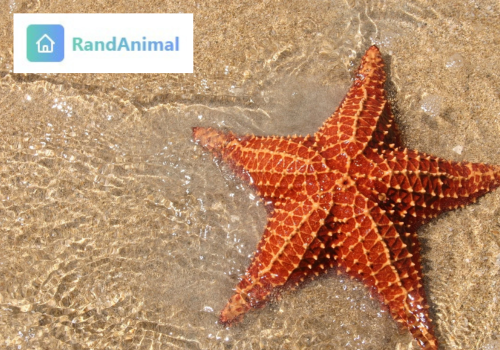
Starfish, more accurately known as sea stars, do not have a brain or blood. Instead of blood, they use seawater to transport nutrients throughout their bodies. Their nervous system consists of a ring of nerve tissue around the central body and a nerve running down each arm.
There is no brain-like central processing organ where decisions are made. Each arm can operate somewhat independently. If one arm detects food, the others often follow, but not because the brain issued a command. Coordination occurs through the nerve ring.
Starfish are also famous for their regenerative abilities. Lost arms can regrow, and in some species, a detached arm can even develop into an entirely new starfish.
This regeneration does not depend on a central nervous system. Different parts of the body contain the resources needed for repair and regrowth.
Sea Urchins
Sea urchins also lack a brain. Like starfish, they have a nerve ring surrounding the center of the body, connected to nerves that extend into their spines and tube feet.
Sea urchins use hundreds of tiny tube feet that emerge through openings in their hard outer shell. These tube feet help them move, sense their surroundings, and gather food.
To eat, sea urchins scrape algae from rocks using a complex five-part jaw structure known as Aristotle’s Lantern, named after the ancient Greek philosopher who first described it.
All of these activities occur without central control. The tube feet respond to local signals, and the jaw reacts directly to food. No brain decides when to eat or where to move. Instead, the body continuously responds to conditions in its immediate environment.
Sea Cucumbers
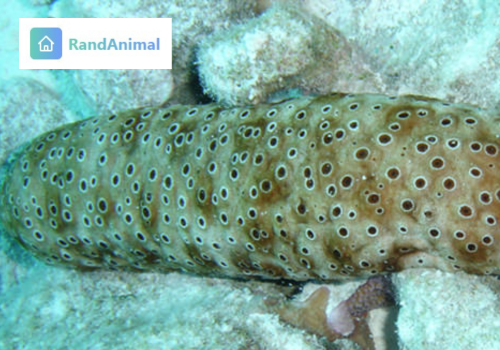
Sea cucumbers are close relatives of starfish and sea urchins. Like their relatives, they do not have a brain. Instead, they possess a simple nervous system consisting of a nerve ring and several nerve cords that run along the length of the body.
They move slowly across the ocean floor, ingesting sediment at one end and expelling the processed material at the other. Sea cucumbers can detect light and touch, but their responses are relatively slow and simple.
One of their most remarkable defense mechanisms is the ability to eject their internal organs when threatened. In some species, these organs are expelled through the anus, while others can expel parts of their digestive system. The lost organs theater regenerate.
This dramatic survival strategy occurs without any involvement from a brain. It is an automatic reflex built into the animal’s tissues and nervous system.
Corals
Corals often resemble rocks or plants, but they are actually animals. Like jellyfish, they belong to a group called cnidarians. A coral reef is built from the calcium carbonate skeletons produced by millions of tiny animals called polyps. Each polyp has a simple nerve net similar to that of a jellyfish. There is no brain and no central nervous system.
Polyps can sense light, touch, and chemical signals in the surrounding water. They typically extend their tentacles at night to capture food and retract them during the day.
Unlike many animals, corals remain attached to a single location throughout their lives. Since they do not hunt or travel, developing and maintaining a brain would provide little advantage while requiring significant energy.
Oysters and Clams
Oysters and clams are mollusks with extremely simple nervous systems. Instead of a brain, they possess three pairs of small clusters of nerve cells known as ganglia. These ganglia are connected by nerve cords but do not form a true brain.
Oysters open and close their shells in response to light, touch, and chemical signals. Clams burrow into the sand and react to vibrations or nearby predators.
These responses do not require a central decision-making organ. Instead, the ganglia closest to the affected body part process the information and trigger an appropriate reaction.
Throughout their lives, oysters filter enormous amounts of water. A single oyster can filter up to 200 liters of water each day. This essential filtering process occurs automatically without the need for a centralized brain.
Tapeworms
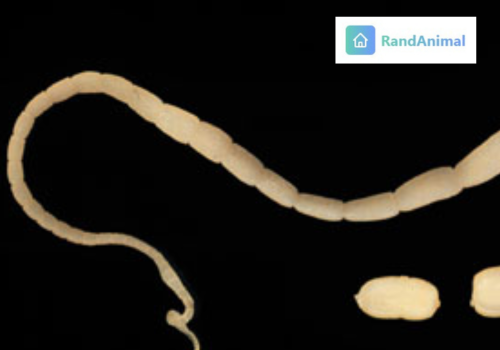
Tapeworms are parasitic flatworms that live inside the digestive tracts of other animals. They possess simple nerve cell clusters called ganglia at the front of the body, but they do not have a true brain. Their nervous system is highly simplified because their lifestyle requires very little sensory processing.
A tapeworm absorbs nutrients directly through its body surface. It has no mouth, stomach, or digestive system of its own. Living inside a host provides a constant supply of food, eliminating the need to search for or capture prey.
Although simple, tapeworms can grow several meters long and survive for many years inside a host. Their lack of complexity is perfectly suited to their way of life.
What This Means for Animal Life
Animals without brains challenge the common assumption that intelligence or centralized control is necessary for survival. Studies in zoology and marine biology show that many simple organisms can successfully survive and reproduce using decentralized systems rather than a centralized brain.
A brain is simply one biological tool. It is extremely useful for animals that move quickly, hunt actively, avoid predators, and navigate complex environments. However, many organisms survive perfectly well using simpler systems.
For creatures that filter water, absorb nutrients, remain attached to one location, or live inside hosts, a brain may provide little benefit compared to its energy cost.
Some of the animals on this list have existed for hundreds of millions of years. Sponges appeared long before fish evolved. Jellyfish were drifting through Earth’s oceans before the first animals ever walked on land.
Their continued success demonstrates that evolution does not always favor greater complexity. It favors whatever works best for survival and reproduction.
Final Thoughts
Animals without brains may not think the way humans or other vertebrates do, but they are far from simple failures of evolution. They represent different solutions to the challenges of life. Some rely on nerve nets, others on nerve rings, ganglia, or even cellular responses without any nervous system at all.
The most successful organisms are not necessarily those with the largest brains. They are the ones whose bodies are best adapted to their environments. In some cases, that adaptation involves a highly developed brain. In others, it involves no brain at all.
Both strategies have proven remarkably effective, and some brainless animals have been thriving on Earth for more than 600 million years.
Studying brainless animals helps scientists better understand how nervous systems evolved. These organisms demonstrate that survival does not always require a complex brain and that evolution can produce many different solutions to life’s challenges.
Frequently Asked Questions
Do all animals have a brain?
No. Many animals, including sea sponges, corals, sea stars, sea urchins, and sea cucumbers, survive without a brain. Some have simple nervous systems, while others lack nervous systems entirely.
How do brainless animals respond to their environment?
Brainless animals rely on nerve nets, nerve rings, ganglia, or direct cellular responses. These systems allow them to detect light, touch, chemicals, and other environmental changes without a central brain.
What animal has no brain and no nervous system?
Sea sponges are the best-known example. They have neither a brain nor a nervous system, yet they can still filter water, absorb nutrients, and respond slowly to environmental changes.
Why didn’t these animals evolve brains?
Evolution does not always favor greater complexity. If an animal can survive and reproduce effectively without a brain, there is little evolutionary pressure to develop one. A brain requires energy, so species only evolve one when the benefits outweigh the costs.

Ali is an animal enthusiast and wildlife writer with a passion for making nature science easy to understand. He has been researching and writing about animal behavior and biology for over 3 years.