
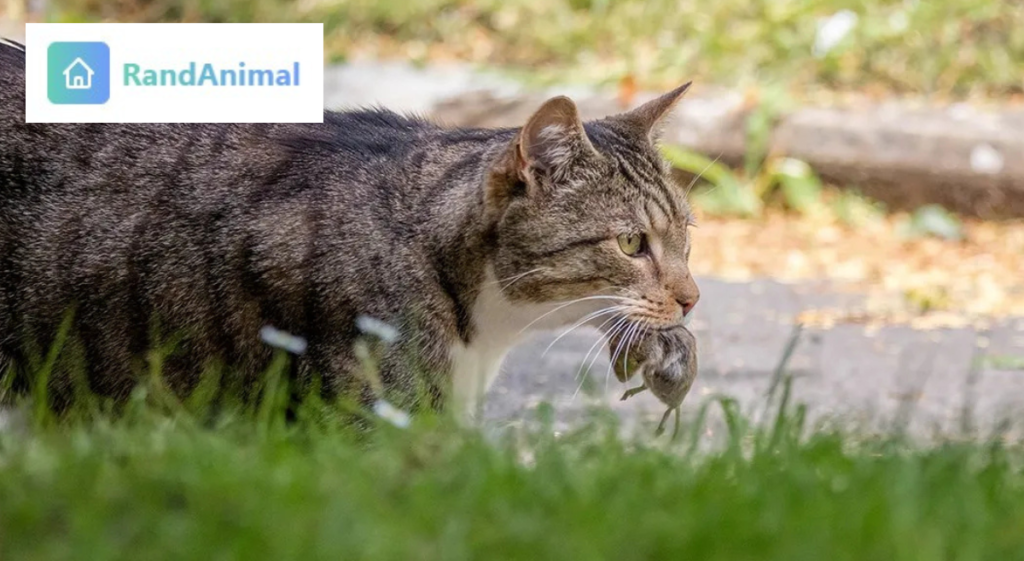
If you own a cat that spends time outdoors, you have probably experienced this scene at least once. You wake up and find a dead mouse, bird, or small lizard on the floor. Your cat looks at you almost proudly. It is one of the most confusing and sometimes disturbing behaviors that pet cats have. Almost every cat owner has a story like this.
This behavior is not random, and it is not a mistake. According to wildlife and pet behavior researchers, this behavior comes from deep instincts. Cats have carried these instincts since long before they became household pets.
In this article, we explore the real reasons behind this strange habit. We use research, expert explanations, and real numbers. Together, they show how common this behavior really is. Read More: Why Do Dogs Eat Grass?
Cats Are Natural Hunters, Even As Pets
Cats have been kept as companions for thousands of years, but underneath the soft fur and lazy naps, they are still small predators at heart. According to Purina, the simple explanation for why your cat brings home dead animals is that it is simply following its instinct to do so.
Even though most pet cats are fed regularly, they still have a strong hunting instinct. Having food in a bowl does not switch it off. The urge to stalk, chase, and catch small animals is part of their biology. They inherited it from their wild ancestors. Their mothers also reinforce this behavior when they are kittens.
Domestication has changed a lot about how cats live, but it has changed very little about how their brains are wired. A cat’s eyes, ears, whiskers, and reflexes are all still built around detecting and catching fast-moving prey.
Watching a cat freeze, wiggle its hindquarters, and pounce on a toy mouse is familiar to many owners. It is the same hunting behavior their ancestors used in the wild. Today, that instinct is simply directed toward something safer and more convenient.
It Is Not Really About Hunger
One of the most surprising facts about this behavior is that it has very little to do with being hungry. Cats that are well fed at home will still chase, catch, and sometimes kill small animals purely because the instinct to hunt is separate from the instinct to eat.
According to a charity that works closely with cat behavior, this drive to hunt remains strong in cats even though they have no real need to find their own food anymore. A cat might already have a full bowl of food waiting at home and still decide to go outside, stalk a mouse for several minutes, catch it, and carry it back inside instead of eating it on the spot.
Research into cat behavior has shown something similar in controlled settings. In one study, cats were given a live, small rodent while they were already in the middle of eating their favorite food, and most of them stopped eating immediately to go after the live animal instead. This strongly supports the idea that hunting and feeding are two separate systems in a cat’s brain, rather than one simply leading to the other.
Why Bring It Home At All?
This is the part that confuses most cat owners the most. If a cat catches its prey outside, why bother carrying it all the way back into the house? According to Cats Protection, the real reason cats bring these so-called gifts home is that their home is where they feel the safest.
In the wild, animals often eat in a safe place. This helps protect them from larger predators. It also reduces the risk of having their food stolen. For a domestic cat, your house has basically become that safe zone, sometimes called their core territory.
This means your cat is not necessarily showing off or trying to impress you on purpose. It is simply following an old survival habit. The instinct is to eat or store food in a safe place. Your living room happens to be the safest place it knows.
What Kind Of Prey Do Cats Usually Bring Home?
Not every cat brings home the same kind of prey. It often depends on where the cat lives and what animals are nearby. Studies show that about 60 to 70 percent of the animals cats kill are small mammals, such as mice, voles, and shrews. Birds usually make up around 20 to 30 percent of their catch.
The remaining prey often includes amphibians, reptiles, and insects. This can vary by season and local environment. In some neighborhoods, cats catch mostly rodents. In coastal or grassland areas, birds and lizards may make up a larger share of what they bring home.
If your cat often brings home one type of animal, there is usually a simple reason. It is more likely to catch what is easiest to find outside than choose a favorite prey.
Is It Really A Gift?
Many cat owners like to believe their cat is bringing them presents out of love, and there might actually be some truth to that idea, even if it is not the main reason. According to PetMD, this gift-giving behavior is considered just as instinctual as scratching a scratching post or kneading a blanket, and many experts see it as a sign of how a cat feels about its owner.
Scientific evidence points more to instinct and safety than emotion. However, affection may still play a small role. Cats that feel safe and bonded with their owners are more likely to bring prey home. Less confident or nervous cats are less likely to do this.
The Teaching Theory
Another popular theory is that cats bring dead or injured animals home to teach their owners how to hunt. It is almost as if they see us as clumsy family members who never learned proper hunting skills.
This idea actually comes from real cat behavior. In the wild, mother cats often bring live or injured prey back to their kittens. This lets the kittens practice stalking, pouncing, and finishing the hunt in a safe environment.
According to a pet education resource, this is especially common in female cats, even ones that have been spayed and never had kittens of their own, since the maternal instinct to teach hunting skills can still show up strongly. That said, male cats bring home prey too, so this is not limited only to females.
If your cat brings home an animal that is still alive, this teaching theory becomes even more convincing, since the cat may genuinely be giving you a live practice target rather than a finished meal.
Many owners see their cat release a live mouse nearby. The cat then watches closely to see what happens. If the mouse tries to escape, the cat catches it again. This catch-and-release behavior is similar to how kittens learn timing and hunting skills before they are fully grown.
How Common Is This Behavior, Really?
This habit is far more widespread than most people realize, and it has a noticeable impact on local wildlife. According to a wildlife conservation report on cat predation, an outdoor cat that regularly hunts may bring home around 24 rodents, 15 birds, and 17 lizards every single year on average, just from one household.
When researchers looked at neighborhoods with many outdoor cats clustered together, they estimated that hundreds of rodents, birds, and lizards could be returned to homes in that area annually. On a larger scale, Wikipedia notes that both feral and free-roaming pet cats are responsible for considerable ecological harm in some environments, due to their natural hunting instinct and their ability to adapt to almost any environment.
In Australia, feral cats have been linked to the extinction of at least 20 native mammal species. They continue to threaten more than 120 others. On islands around the world, cats introduced by humans have also contributed to the extinction of at least 33 unique species.
These numbers may seem surprising. However, they show that bringing home a dead mouse is not just a strange pet habit. It is part of a much larger pattern seen in nature every day.
Does Personality Play A Role?
Interestingly, not every cat brings home the same amount of prey, and researchers have started looking into why some cats hunt and deliver more often than others. A study that surveyed thousands of cat owners in France found a connection between certain personality traits and how often cats bring prey back home.
Some studies found that less agreeable or more dominant cats brought home birds less often. This suggests that hunting behavior may depend not only on instinct but also on a cat’s personality and confidence.
What People Often Wonder About This Habit
A common question that comes up in casual conversations and online discussions is whether cats actually understand that bringing home a dead animal might upset their owner, or whether they are completely unaware of how we react. Based on what researchers currently understand, cats are not deliberately trying to gross anyone out.
They are simply following instincts that have nothing to do with predicting human emotions. A cat cannot fully understand why a person might scream or react with disgust at the sight of a dead mouse on the kitchen floor, since to the cat, this is just normal, successful behavior worth repeating.
What You Can Actually Do About It
If your cat regularly brings home dead or injured animals and you would rather it stop, there are a few practical options. Keeping cats indoors, or only allowing supervised outdoor time, removes most opportunities for hunting in the first place.
For cats that already go outside freely, giving them plenty of indoor play that mimics hunting, such as toys on strings or items that move unpredictably, can help satisfy some of that natural drive without involving real animals.
It is also worth knowing that scolding a cat after the fact does not really work. Since the behavior is driven by instinct rather than a conscious decision to please or upset you, punishment after the gift has already been delivered will likely just confuse your cat rather than change anything.
FAQs
Why do cats bring dead animals home?
Cats may bring dead animals home due to natural hunting instincts, social bonding behavior, or caregiving instincts. In many cases, they treat their owner as part of their family group and share prey as they would within a feline social structure.
Is my cat trying to feed me when it brings prey?
Not directly. While it may look like feeding behavior, it is more likely linked to instinctive hunting patterns, teaching behavior, or safe storage behavior rather than a literal attempt to feed humans.
Can I stop my cat from bringing prey home?
You may not fully stop the behavior, but you can reduce it. Using a bell collar, keeping your cat indoors during early morning and evening hours, and increasing interactive indoor play can significantly reduce hunting activity.
Final Thoughts
Bringing home dead animals might look strange or even a little disturbing to us, but for a cat, it makes complete sense. It is a mix of deep-rooted hunting instinct, a need to feel safe while dealing with prey, possible teaching behavior passed down from mother cats, and, in many cases, a genuine, if slightly misguided, attempt to share something valuable with the people they trust the most.
The next time your cat proudly drops a dead mouse at your feet, try to remember that, in their mind, they are not trying to scare you. They are simply doing what cats have done for thousands of years, and in their own strange way, including you in it. Read More about Animals That Sleep With One Eye Open.

Ali is an animal enthusiast and wildlife writer with a passion for making nature science easy to understand. He has been researching and writing about animal behavior and biology for over 3 years.